
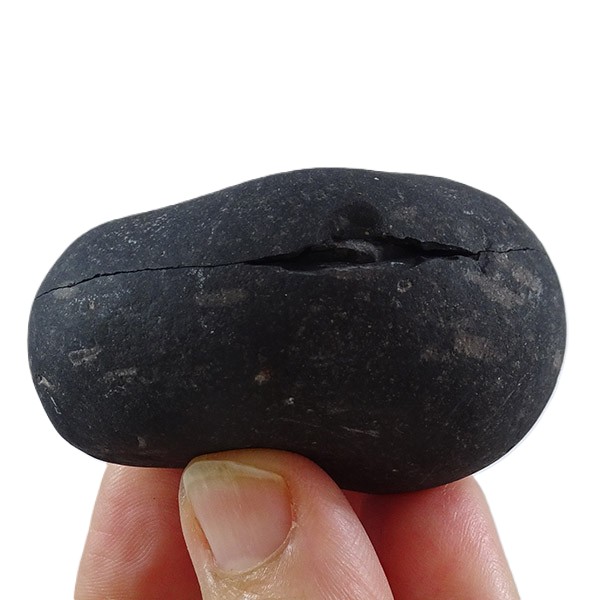
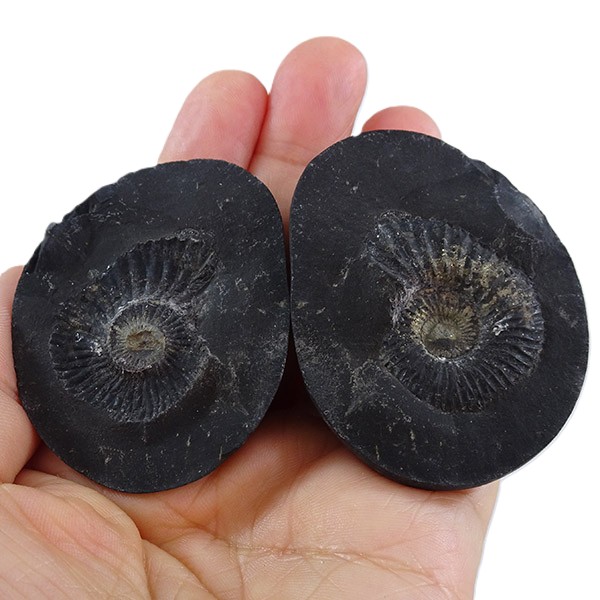
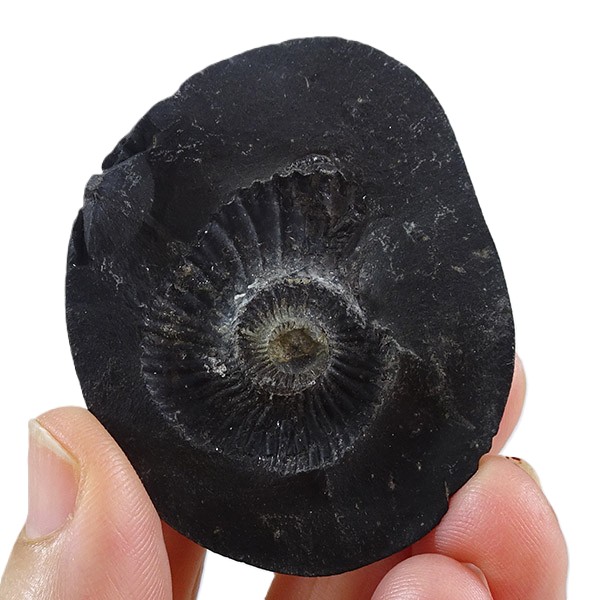
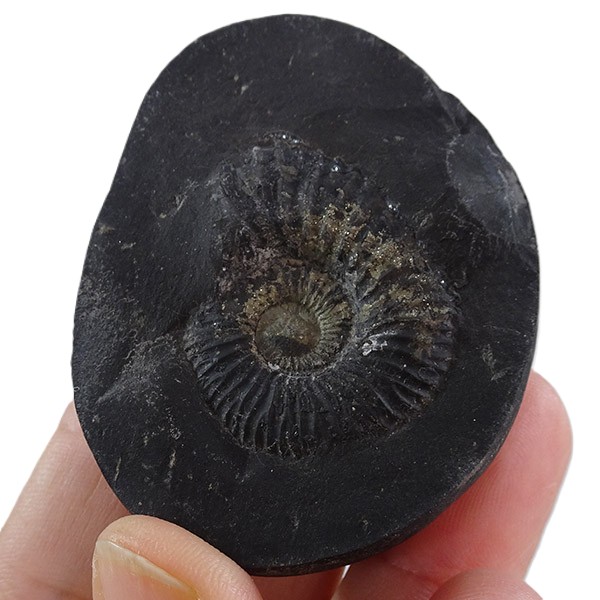
Blanfordiceras wallichi
45,00 €
System: Jurassic.
Stage: Tithonian.
Formation: Nupra.
Origin: Gandaki River, Himalayas, Nepal.
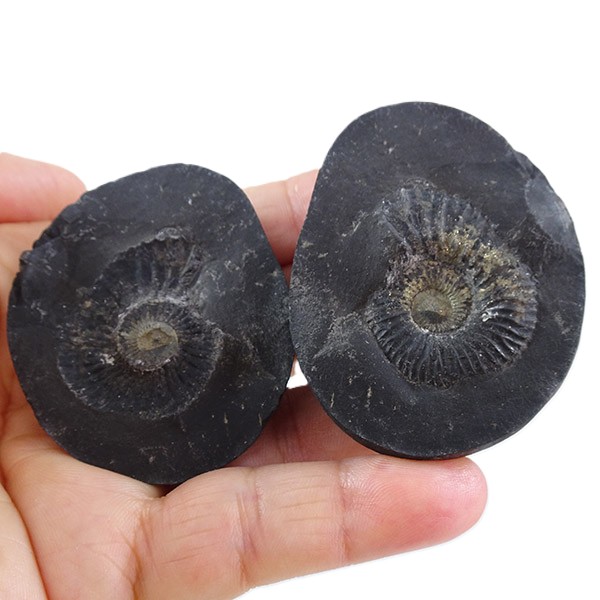
Measurements: 5.6 cm x 4.5 cm and 5.6 cm x 4.5 cm
Fossil found in a black shale concretion whose core contains the shell and mold of a slightly pyritized ammonite with bifurcated septa.
A concretion is a hard, compact mass of mineral matter that forms within a sedimentary rock or soil. These structures are usually spherical, subspherical or irregular. They form through the precipitation of minerals dissolved in fluids circulating through the rock or soil, and often have a core, such as a fossil or grain of sediment, around which the minerals accumulate.
Himalayan fossils are found in sedimentary nodules of shale that form from the accumulation and compaction of fine particles, such as clay and silt. Such fossils are found and traded along the Gandaki River basin, which cuts through the Himalayas on the western side of the Annapurna massif. The Gandaki River flows through the Himalayan range in the Mustang district of Nepal, a spectacular and remote region with exotic landscape.
Originally, fossils are called saligrams. Saligramas are sacred stones with a deep religious meaning in Hinduism, representing Vishnu and being objects of veneration and worship. Worship of saligramas is believed to bring prosperity, well-being and divine blessings.