
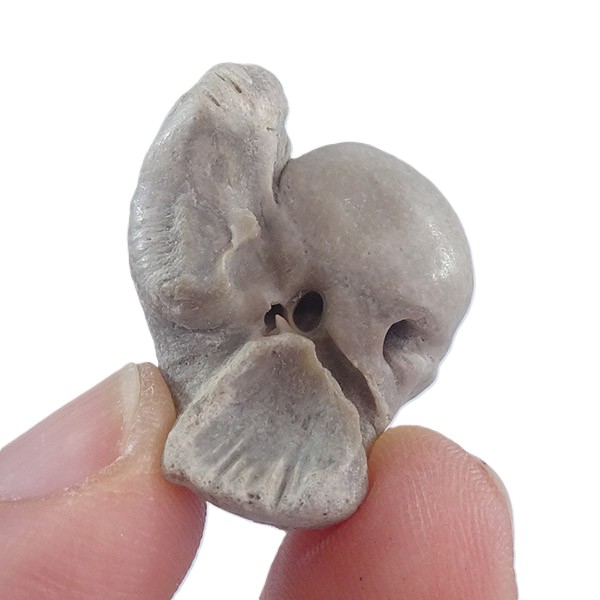
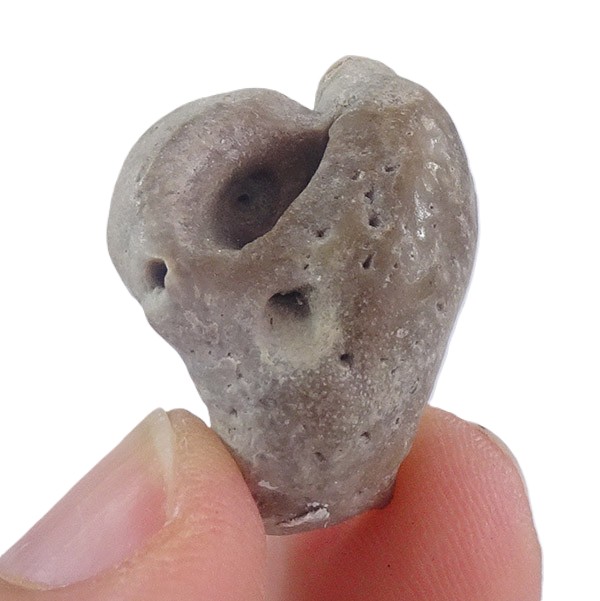
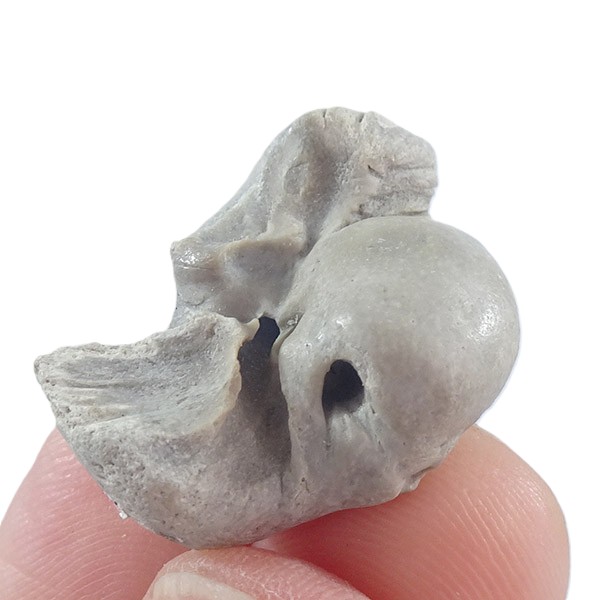
Dolphin periotic SOLD
Series: Pliocene.
Formation: Yorktown.
Origin: Beaufort County, North Carolina, USA.
Measurements: 2.7 cm x 2 cm
The newspapers are dense, thick bones that are part of the tympano-periotic complex of the dolphin ear and its function is associated with the sound perception.
Scientists have discovered that periotics are useful in the identification of dolphins and other odontocete species because each species has unique characteristics in these bones. This situation is similar to what happens with otoliths, hard structures in the inner ear of fish, used for the identification of species and for the detection of different morphological groups within the same species.
The limited information available suggests that the shape of periotics is usually more similar between species of the same genus and family than between species of different genera and families. This implies that the morphological characteristics of these organs have a certain “imprint” that can reflect the historical relationships between species. Discovering that morphological differences between individuals are related to their genetic variations is essential for biologists, as this will contribute to a better understanding of the evolutionary history of species.
The morphological characteristics of periotics have been of great importance in archaeological research, since their descriptive study has allowed us to determine that the ancient inhabitants of the Baja California peninsula fed on marine organisms, particularly various species of dolphins. https://resonanciacientifica.coscyt.mx/ciencia/perioticos-clave-para-identificador-delfines-trabajon-darnos-una-pista-sobre-su-historia-evolutiva/