
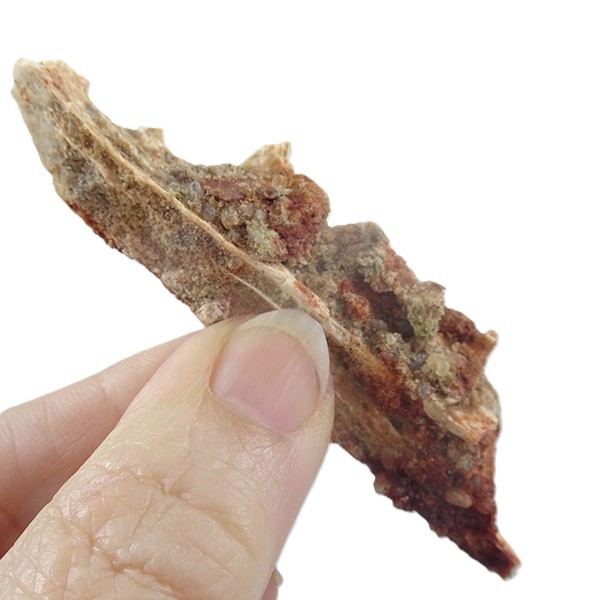
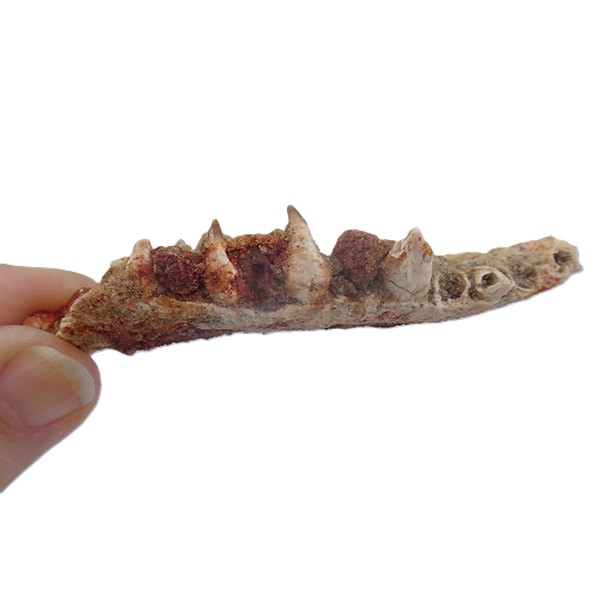
Lepisosteidae SOLD
System: Cretaceous.
Origin: Taouz, Kem Kem Valley, Morocco.
Measurements: 8 cm x 2.3 cm
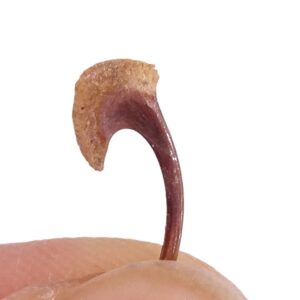
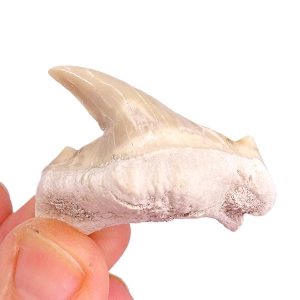
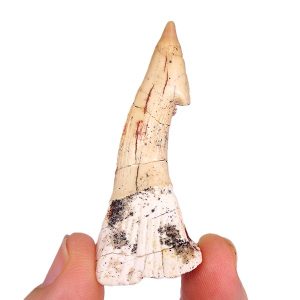
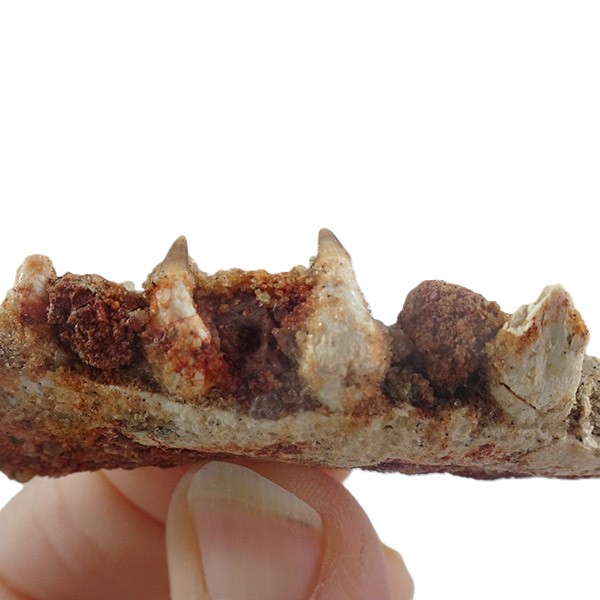
Jaw of holostean actinopterygian fish belonging to the family Lepisosteidae.
Lepisosteiformes are a small and primitive group of fish, colloquially called pejelagartos, catanes, manjuaríes, gaspares..., they are freshwater and estuarine fish that have inhabited the Earth since the Mesozoic Era. They have an extensive fossil record dating back to the Cretaceous period.
Lepisosteiformes are members of an ancient order of “primitive” fish with spines. There are fossil records of Lepisosteids in Europe, Asia and America, but only in the American continent are there living species. This suggests that in times past these fish had a much wider distribution compared to today.
They are considered the most primitive bony fish in freshwater.
The holosteans (Holostei, from the Greek ολόκληρο, "whole" and οστό, "bone") group fish that have:
- almost completely ossified skeleton.
- ganoid scales: hard, shiny, diamond-shaped scales found in primitive fish such as sturgeons and alligator gar. They are large plates that cover the body of the fish with a layer of hard enamel called ganoin, instead of the dentin and cosmine of the older cosmoid scales from which they are derived. These scales do not overlap like others, but rather fit together using peg-and-socket joints, forming armor that protects the fish from predators.
- persistent notochord.