
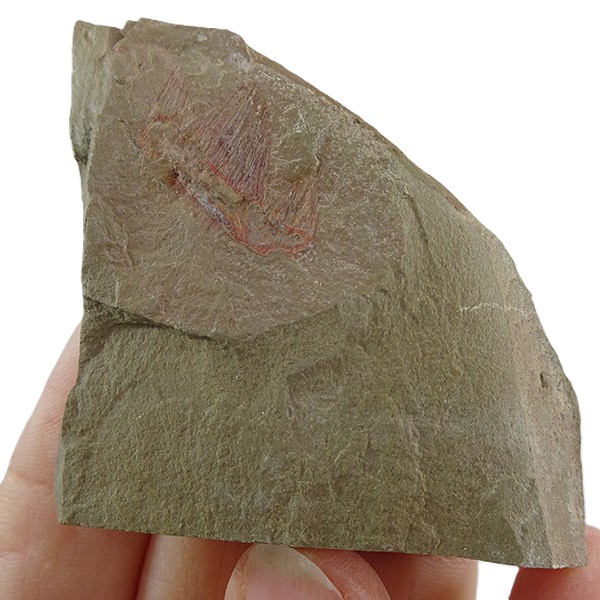
Hurdiidae
65,00 €
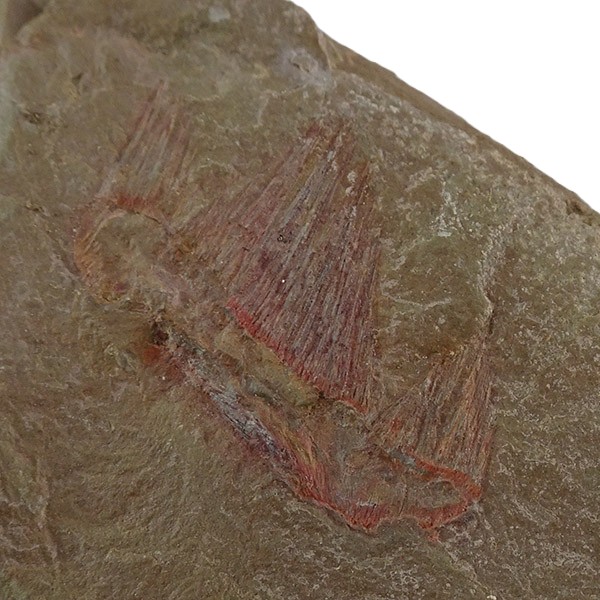
System: Ordovician.
Formation: Fezouata.
Origin: Zagora, Morocco.
Piece measurements: 5.4 cm x 5.2 cm
1 in stock
Frontal appendage of a radiodont.
Frontal appendages are the most frequently preserved body parts of radiodonts, and their well-preserved anatomical features are crucial for describing taxonomic diversity at the species level, as well as providing essential data on their way of life, paleoecology, and feeding behavior.
The hurdid (Hurdiidae) are an extinct family of radiodonts (an extinct order of arthropods distinguished by their distinctive frontal appendages). Radiodonts are the first known large predators, but also include sediment sifters and filter feeders that lived during the Paleozoic era. They could be considered the longest-lived clade of radiodonts, since they spanned from the Cambrian to the Devonian.
The hurdids had a wide range of body sizes. The smallest known hurdid specimen is estimated to have had a body length of 6-15 millimeters, but it is not known whether this specimen was a juvenile or adult. Aegirocassis, The largest known arthropod measured more than 2 meters long, comparable in size to the largest known arthropods.