
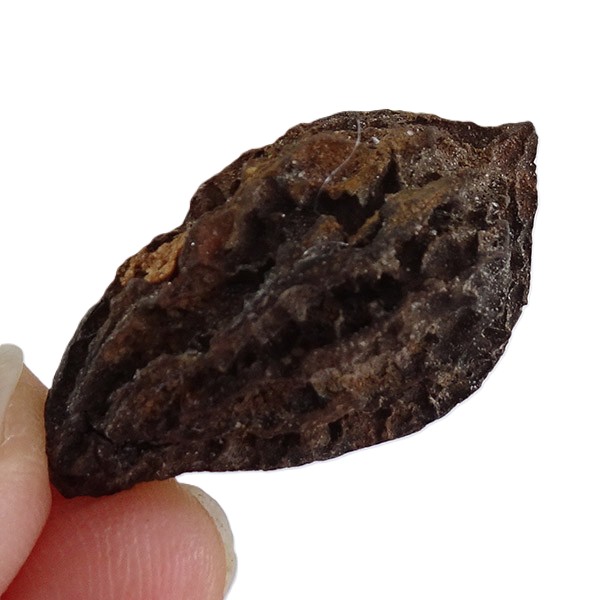
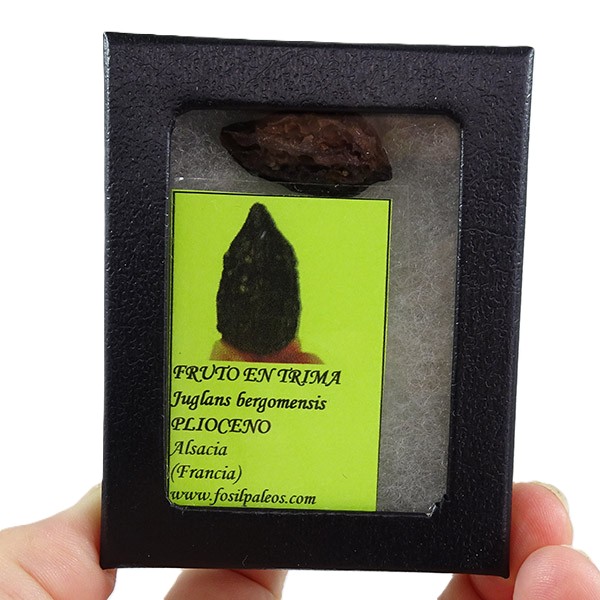
Juglans bergomensis
25,00 €
Series: Pliocene.
Origin: Alsace, France.
Measurements: 3 cm x 1.8 cm
1 in stock
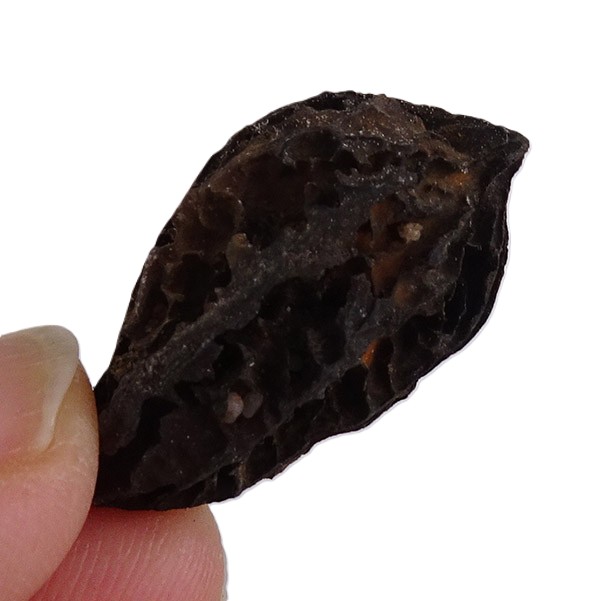
Fruit in trima Juglans, from an old collection.
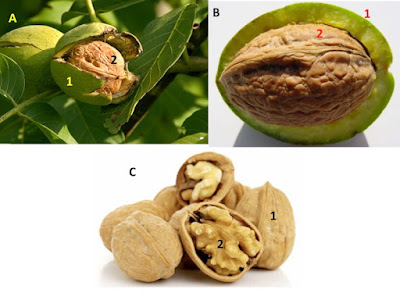
The fruit that we commonly call "nut" (like the walnut tree) is botanically a trima, which is a type of drupe, with a fleshy epicarp and mesocarp, which dry out and open when ripe, exposing the hard shell (endocarp) that contains the seed.
Figures A-B: trimmes showing the mesocarp (1) and the endocarp (2). C: "nuts", showing the stony and corrugated endocarp (1), and the cerebriform seed in which one of the cotyledons can be seen (2).
In the fossilization process, the hard or partially mineralized parts always remain. This fossil is unusual because it is not mineralized; in fact, it is composed exclusively of organic matter.
- Hazelnuts (Corylus) and you have (Fagus): deciduous trees adapted to the ambient humidity and temperate soils in the valleys and lowlands.
- Walnut (Juglans): integrated into mixed forests of the plains or mid-slopes under summer humidity conditions.
- Caria (Carya): genus of trees of the Juglandaceae family, part of the mixed mesophilic forests under summer humidity conditions.
- Spruce trees (Spruce) and pines (Pinus): dominant conifers in higher altitude areas or poor soils.
- Storaxes (Styrax): relicts of a more temperate/subtropical character that still resisted in favorable refuges before their final retreat from Central Europe.
- Sweetgum (Liquidambar)It acted as a thermophilic component of mid-latitudes, prior to the great Pleistocene glaciations that eliminated the genus Liquidambar from the central European region.
The box is included in the price.