
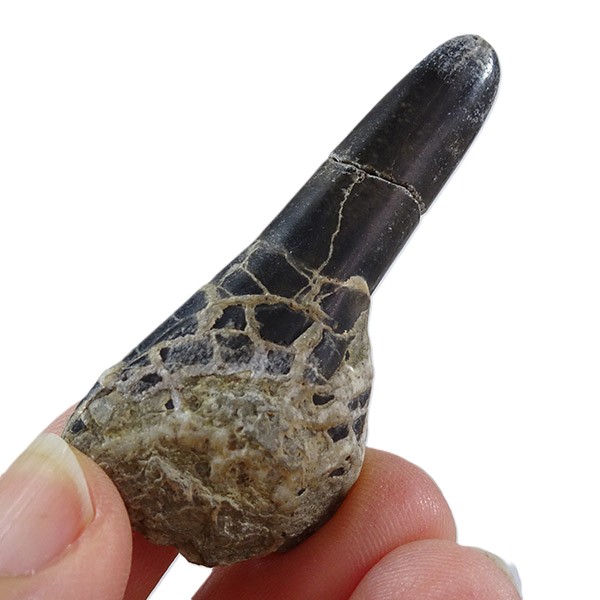
Dactyloteuthis irregularis
15,00 €
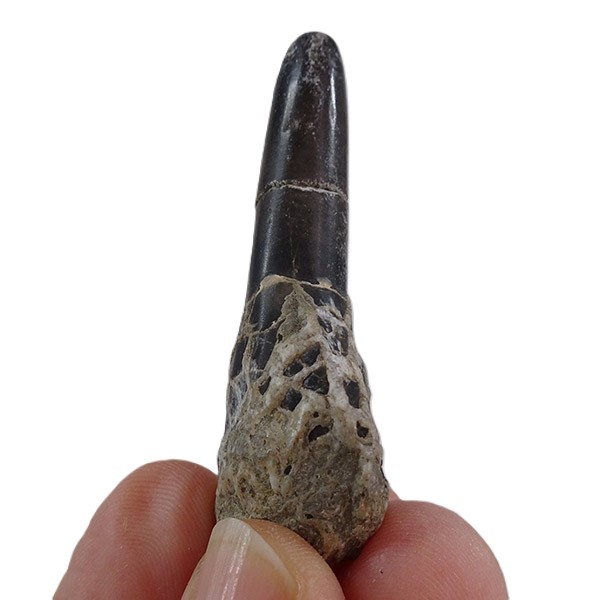
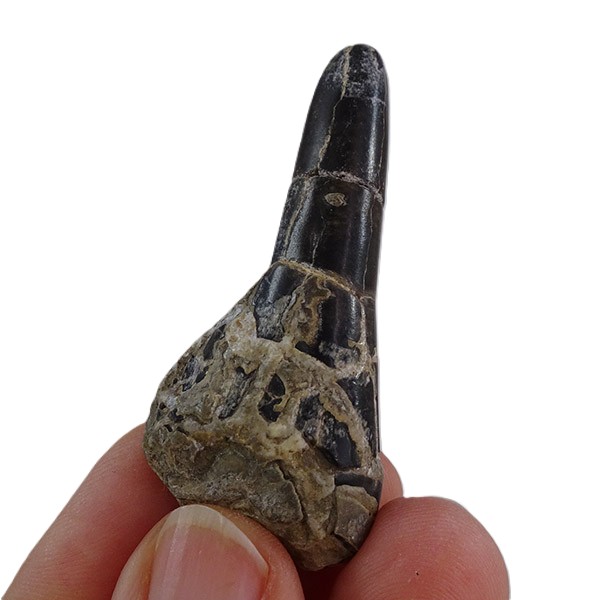
System: Jurassic.
Stage: Toarciense.
Origin: Figeac, Lot department, France.
Measurements: 5.7 cm x 2.5 cm
Dactyloteutis It is a genus of belemnites (extinct group of cephalopod mollusks) that They lived during the Mesozoic (Jurassic and Cretaceous), they were predatory marine animals that swam in schools and fed on other mollusks, small fish and crustaceans. They became extinct at the end of the Cretaceous, about 66 million years ago, along with the dinosaurs.
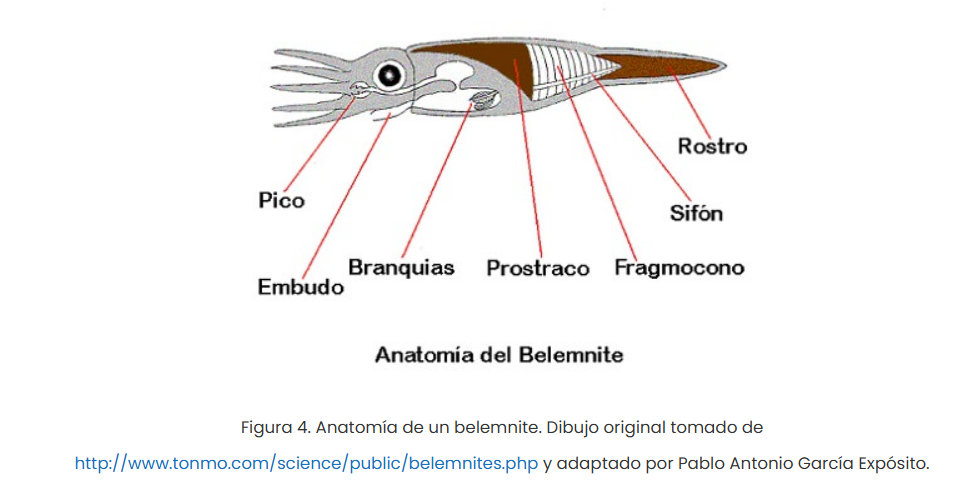
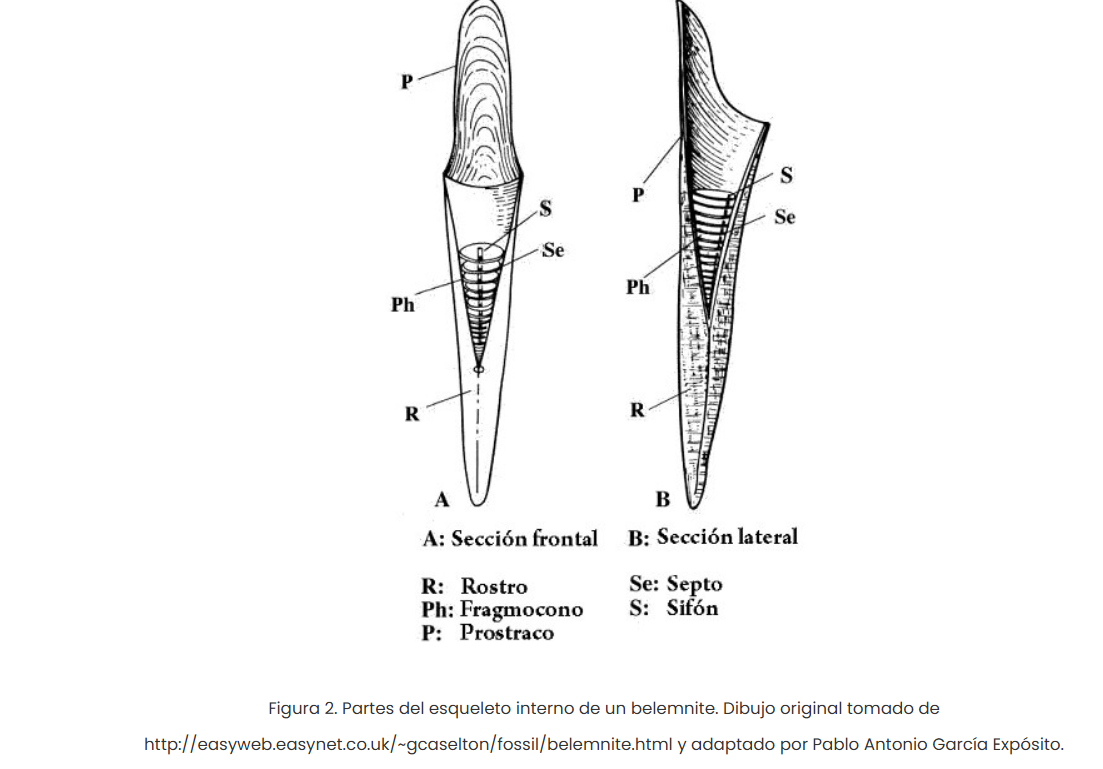
He face It is a solid piece that is usually found fossilized, normally cylindrical in shape, ending in a sharp or rounded point. This shape is reminiscent of a bullet and had a counterweight function. The face has a conical hollow at the end opposite the tip – the alveolus – where the septate part of the skeleton is inserted, which is the so-called phragmoconus.
He phragmoconus of the belemnites it is reduced, straight and extends a little beyond the alveolus. This septate cone has the septa very close to each other and is crossed by the siphon. The phragmocone is formed from a mineral called aragonite, the same one that forms the shells of ammonoids and nautiloids, however, the face of the belemnite is formed from calcite mineral. The latter is more stable than aragonite, which explains why the face of belemnites is found fossilized in abundance while phragmocone is rare. Furthermore, the rostrum is solid while the phragmocone is mostly hollow. In the sections of broken pieces of the face, calcite crystals in a radial position and some concentric growth rings can be observed.
The third part of the skeleton – the prostraco – is a lateral extension of the phragmocone and its preservation is even rarer. It is the vestigial part of the habitation chamber that provided support and protection for the animal's organs.
If we could see a live belemnite today, it would remind us of a modern squid. The skeleton was included in the soft body of the animal (the mantle) so that the face was at one end and took up about a third of its length. It served as a counterweight for the organs, head and arms so that the animal could adopt a horizontal position without effort.
In the center of the body was the phragmocone that was used to control the buoyancy of the animal by partially emptying its chambers.
The prostraco formed a shield that protected the viscera. The head and tentacles were at the front end, protruding from the mantle.