
Poliochera cretacea
380,00 €
System: Cretaceous.
Series: Superior.
Stage: Cenomanian.
Origin: Hukawng Valley, Kachin State, Myanmar.
Mass: 1.80 g
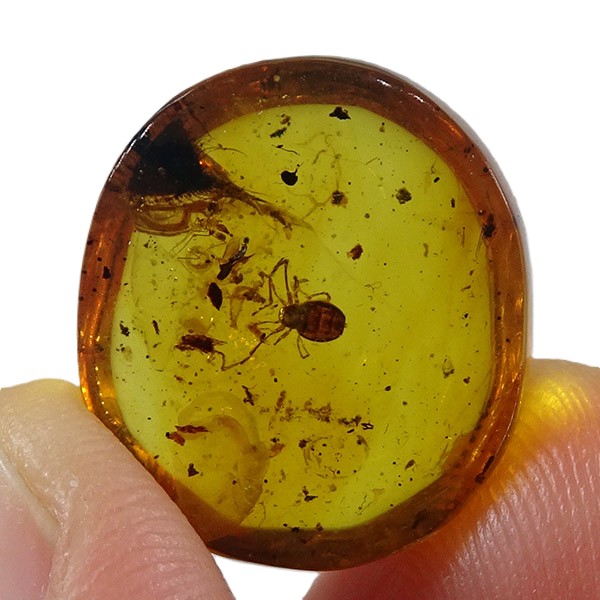
Piece measurements: 2 cm x 1.7 cm
1 in stock
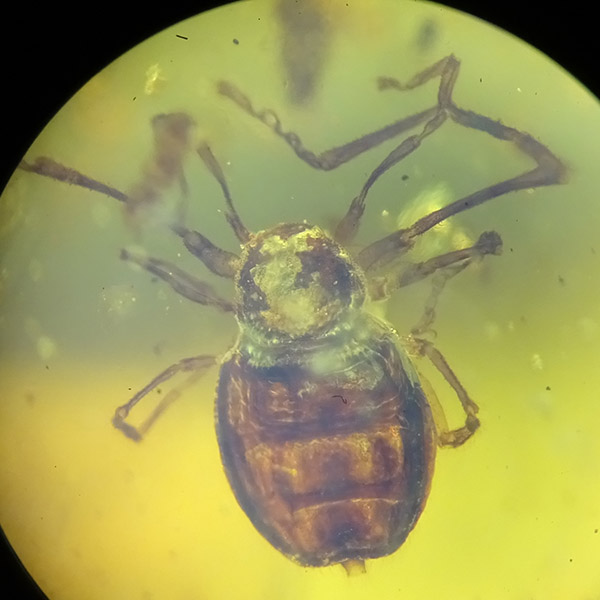
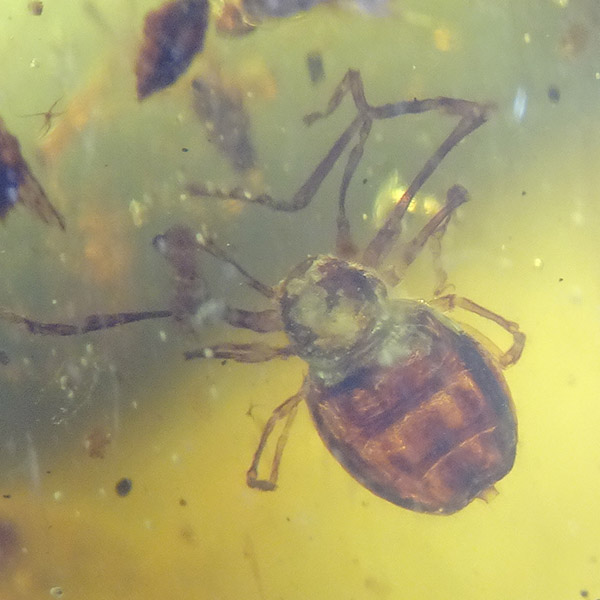
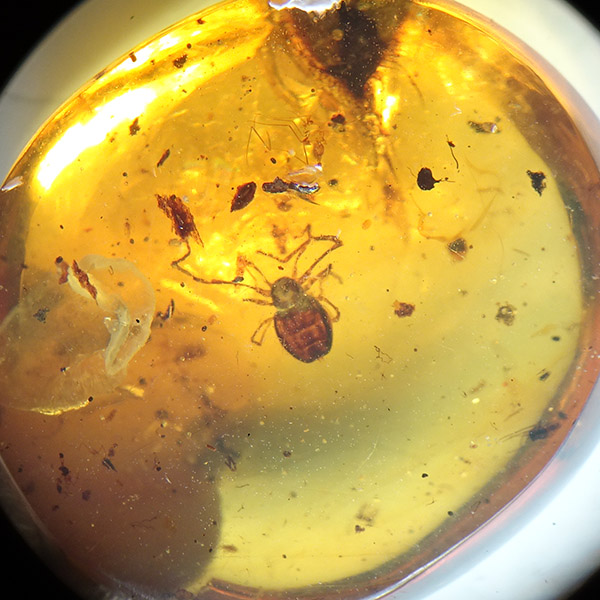
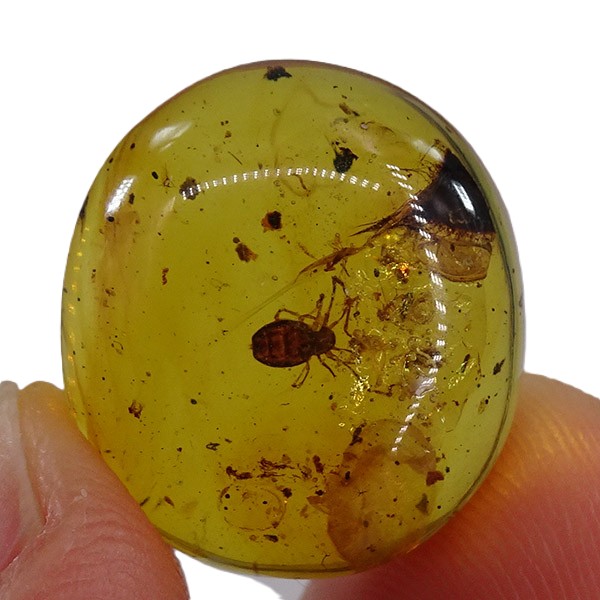
This piece contains a ricinulid or hooded tick (Ricinulei) possibly of the species Poliochera cretacea.
The ricinulides They are an order of arachnids (arachnids have eight legs and the body divided into two parts, while insects have six legs and the body divided into three parts...) long considered one of the rarest invertebrate groups. Ricinulids are now known to be locally abundant in certain areas, such as northern South America.
Poliochera cretacea It is small and is considered a second or third instar nymph. Ricinulids have a robust cuticle, the head is covered by a hood and the posterior part (opisthosoma) is divided into transverse and often vertical sections. These small to medium sized arachnids (5-15 mm in length) are slow moving and apparently feed on termites. This Burmese fossil was assigned to the extinct superfamily Poliocheroidea.
Burmese amber also known as Burmite or Kachin amber dates back about 100 million years. This amber is of great paleontological interest due to the diversity of flora and fauna it contains as inclusions, especially arthropods but also birds, amphibians, reptiles, fragmentary remains of dinosaurs...
Burmese amber comes mainly from the fossilized resin of extinct conifers belonging to the Araucariaceae family (trees related to modern trees). Agathis either Araucaria), which lived in humid tropical forests during the Cretaceous period.