
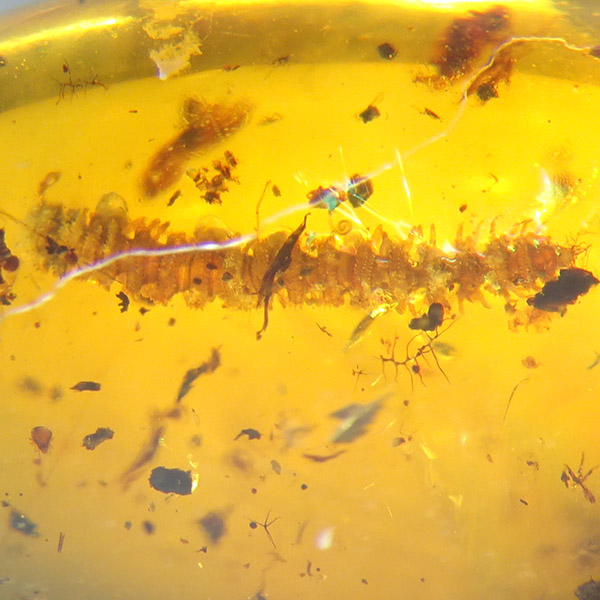
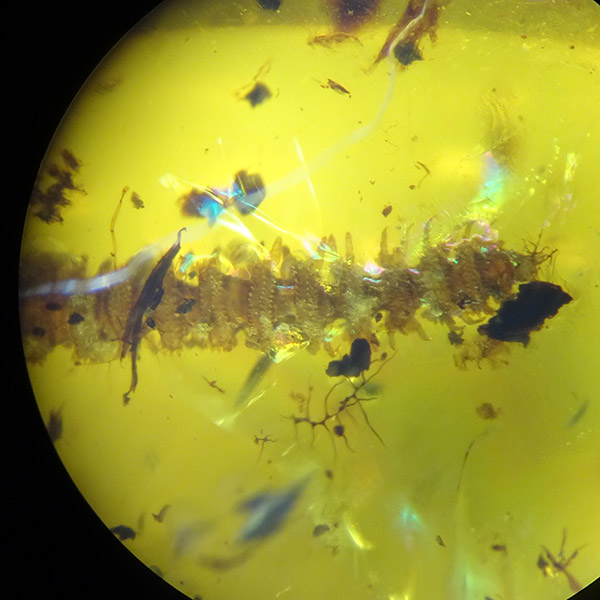
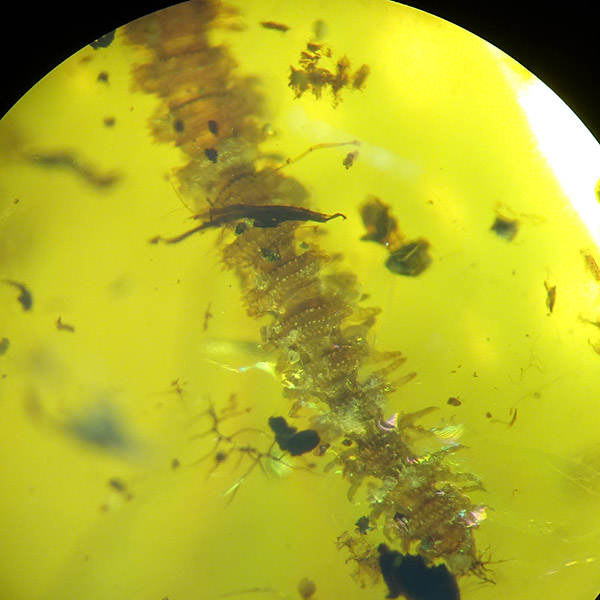
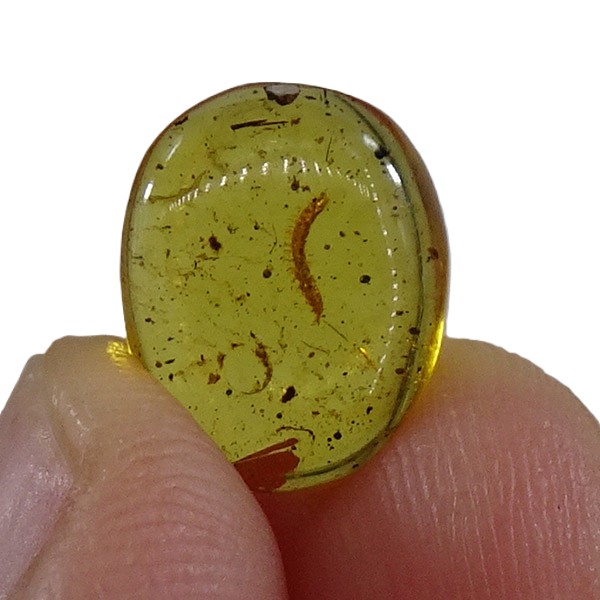
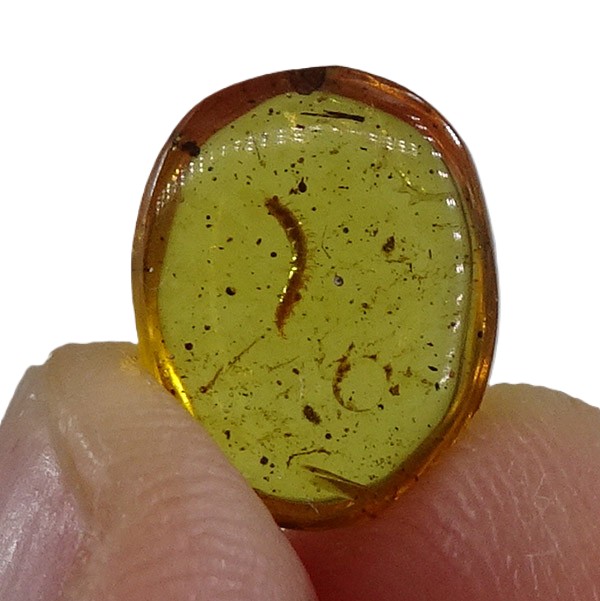
Pauropsxenus ordinatus
75,00 €
System: Cretaceous.
Series: Superior.
Stage: Cenomanian.
Origin: Hukawng Valley, Kachin State, Myanmar.
Mass: 0.86g
Piece measurements: 1.6 cm x 1.3 cm
Length of Pauropsxenus: 5mm
1 in stock
Burmese amber also known as Burmite or Kachin amber dates back about 100 million years. This amber is of great paleontological interest due to the diversity of flora and fauna it contains as inclusions, especially arthropods but also birds, amphibians, reptiles, fragmentary remains of dinosaurs...
Burmese amber comes mainly from the fossilized resin of extinct conifers belonging to the Araucariaceae family (trees related to modern trees). Agathis either Araucaria), which lived in humid tropical forests during the Cretaceous period.
This piece contains a millipedes and coprolites.
Pauropsxenus ordinatus is a millipede (class diplopoda: myriapod that is characterized by having two pairs of articulated legs in each of its body segments) of the subclass Penicillata and its only order Polyxenida, generally known as bristle millipede, are the sister group to all other extant diplopod taxa. They have unique morphological characters represented by a soft and non-calcified cuticle, covered with trichomes or hairs and by having few legs (no more than 17 pairs) and by the absence of copulatory appendages in males. Individuals are small, between two and five millimeters and with a maximum length of seven, and are usually found on the ground, dead wood, under the bark of dead trunks or living trees and shrubs, in leaf litter and under rocks.
These hairy millipedes lack the chemical defenses and hard, calcified exoskeleton of other diplopods, so they instead use a single defensive system: their distinctive hairs or setae arranged in tufts or series that can easily separate and become entangled in the limbs and mouths of predatory insects.