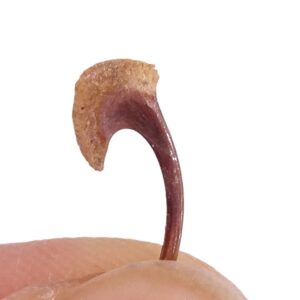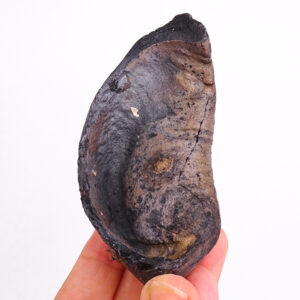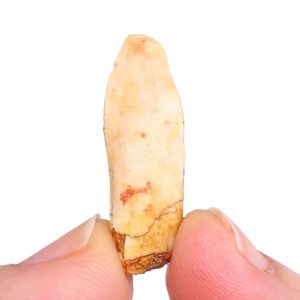

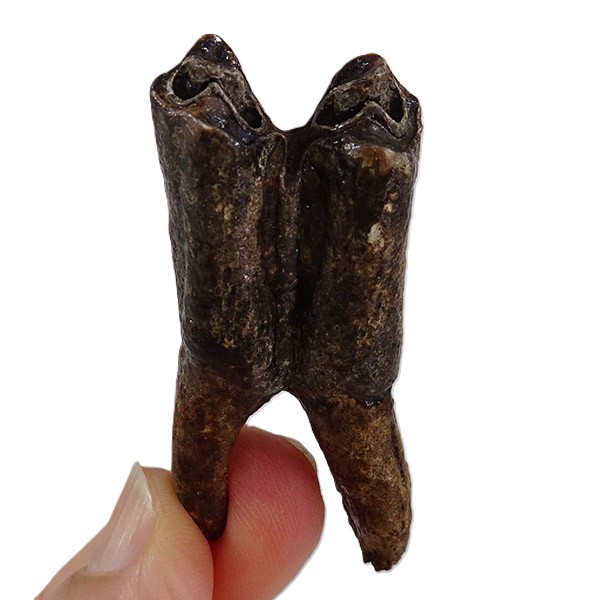
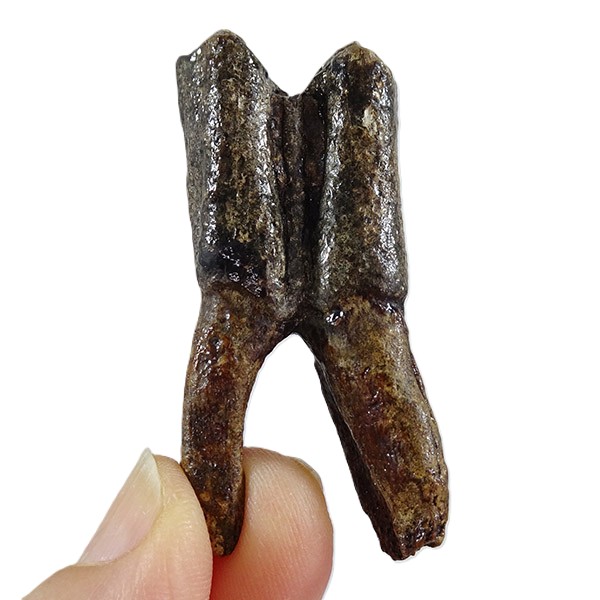
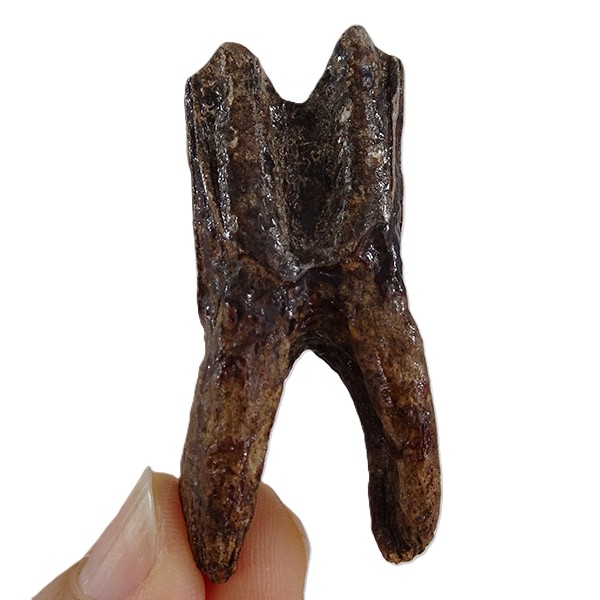
Bison priscus
48,00 €
Series: Pleistocene.
Origin: San River, Poland.
Measurements: 5.5 cm x 2.5 cm
Molar of the lower jaw of steppe bison.
El bisonte estepario poseía una dentición especializada para el pastoreo intensivo, compuesta por un total de 12 premolares y 12 molares hipsodontos (de corona alta). Esta estructura simétrica y robusta era una adaptación evolutiva clave para sobrevivir en las duras estepas del Pleistoceno.
- hipsodoncia: coronas largas que emergían de la encía de forma continua para compensar el desgaste por el pasto.
- premolares (P2, P3, P4): piezas estrechas que cortaban y acomodaban el alimento antes de la trituración.
- molares (M1, M2, M3): Estructuras grandes y robustas encargadas de la masticación pesada.
- tercer molar inferior (m3): pieza más distintiva, con tres lóbulos, un hipoconúlido y más de 40 mm de longitud.
- reemplazo dental: dientes de leche que brotaban al nacer y se cambiaban por los definitivos entre los 2 y 3 años.
These were animals similar to the current European bison, but much more robust and larger, with longer horns and adapted to life in open spaces such as the steppes and the limits of the tundra. Its relationships with the current bison species are not entirely clear, although it tends to be assumed that the species gave rise to the current European bison at the beginning of the Holocene from smaller forms such as Bison priscus mediator, which adapted to the new warm and forested environment that was beginning to replace the glacial tundra-steppe in Europe. The giant subspecies of Asia and North America, such as Bison priscus gigas, disappeared without offspring or gave rise to the current American bison (Bison bison).
Primitive man was a habitual hunter of this species. Steppe bison are frequently represented in cave paintings in France (Lascaux) and Spain (Altamira).