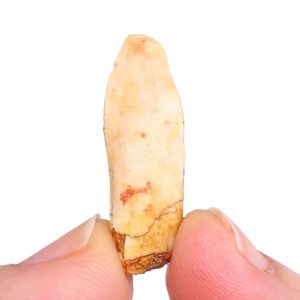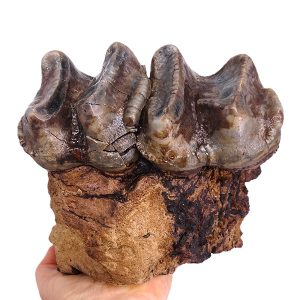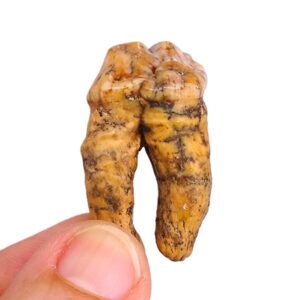


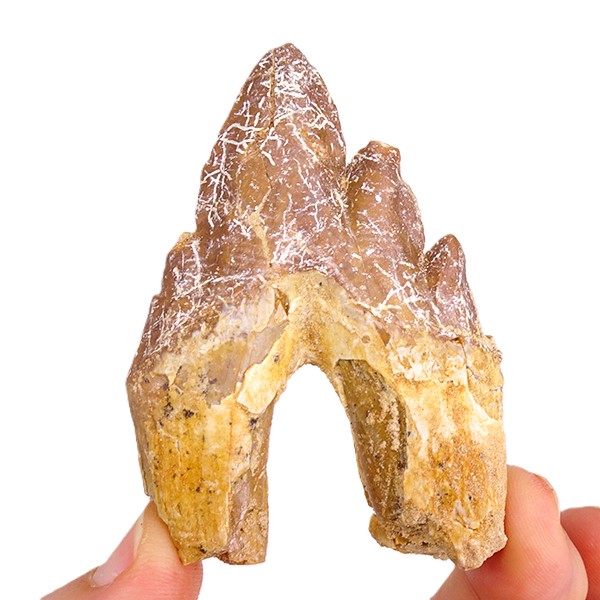
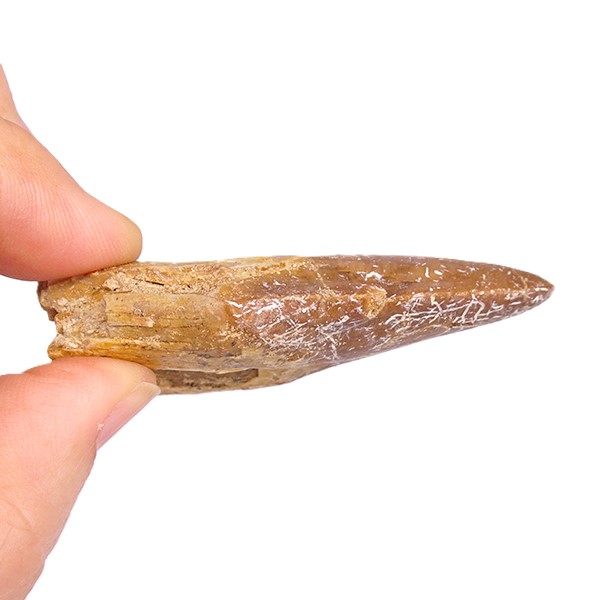
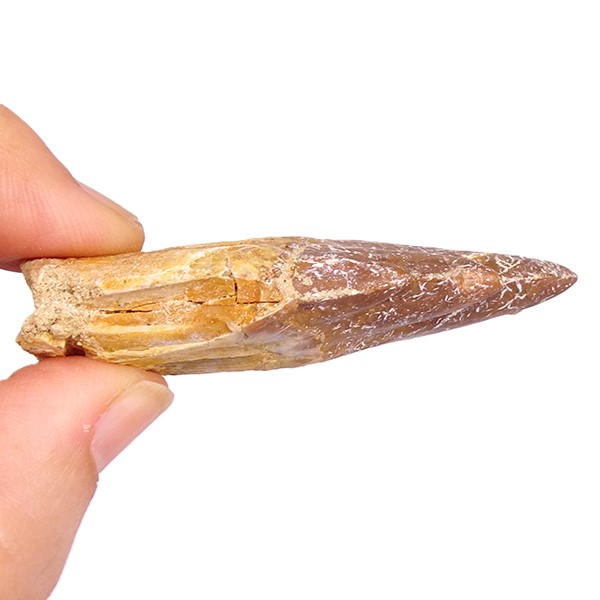
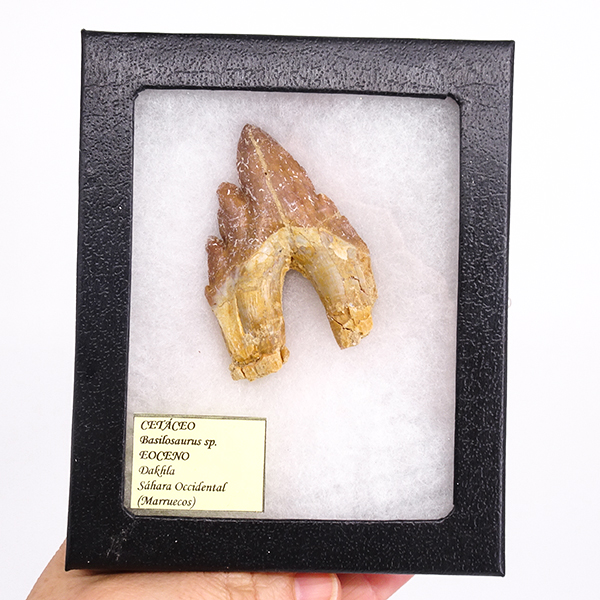
Chrysocetus fouadassii
260,00 €
Origin: Dakhla, Western Sahara.
Chrysocetus premolar.
Chrysocetus belongs to the Basilosauridae family. Basilosaurs (Basilosaurus, -king reptile- in ancient Greek) are an extinct genus of archaeocete cetaceans; It is the first large cetacean to appear in the fossil record and is a key piece in the study of its evolution. They appeared in the late Eocene, approximately forty-five million years ago, inhabiting the shallow coastal waters of the oceans. Two of their most interesting features are the degree of elongation of their body compared to that of modern whales and the two vestigial hind legs they possessed. They became extinct approximately thirty-six million years ago, shortly before the beginning of the Oligocene, due to a major episode of climate change known as Stehlin's "Great Rupture", producing progressive cooling, which led to the formation of an ice cap in Antarctica, as well as the formation of a layer of cold water on the ocean floor. The formation of caps caused a significant decrease in sea level and accentuated the albedo effect, reflecting solar radiation and causing a large drop in temperatures. The cold water layer caused many of the species that lived in warm waters to perish, giving rise to a very little diversified fauna. The climate change that was taking place would be the preamble to the first polar ice ages.
The box is included in the price.