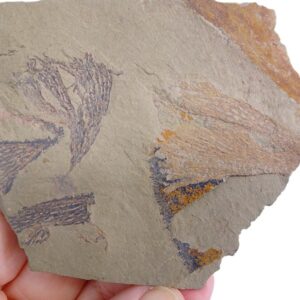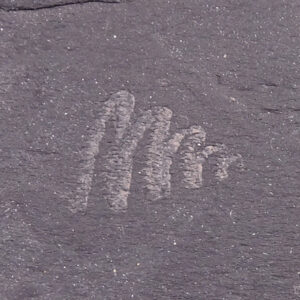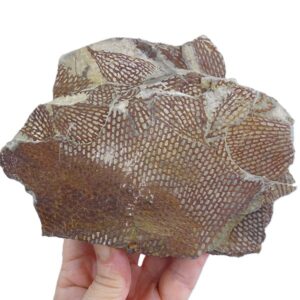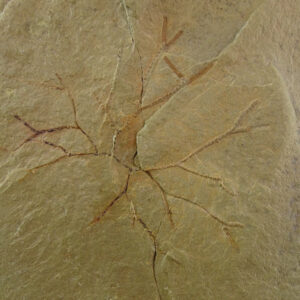

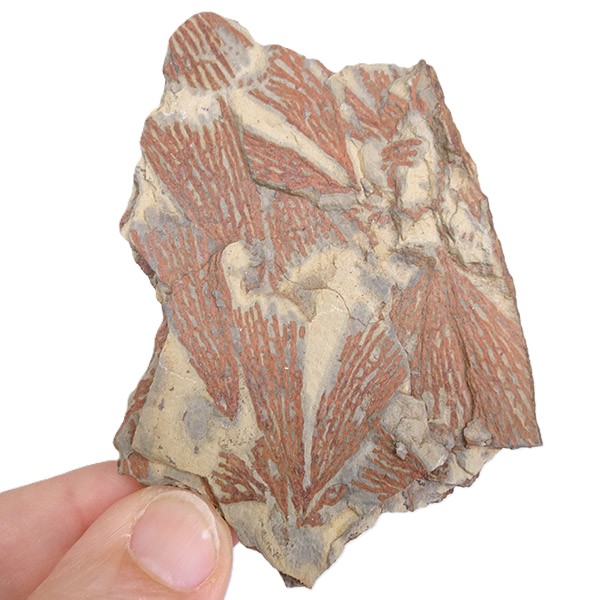
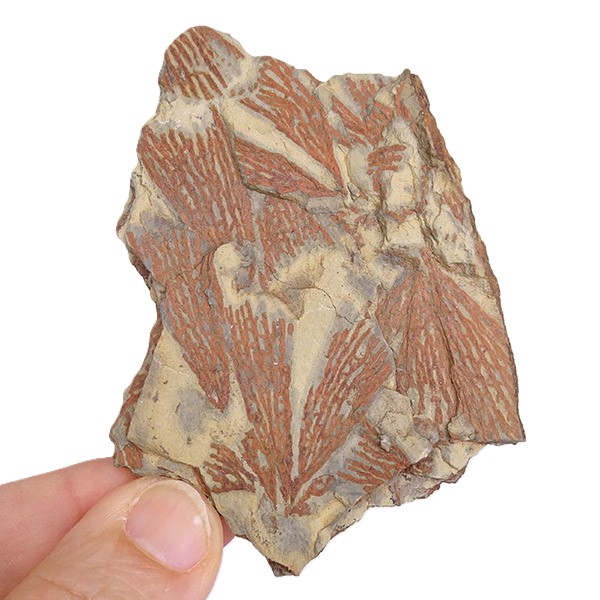
Calyxdendrum amicabilis SOLD
System: Ordovician.
Stage: Tremadocian
Formation: Fezouata.
Origin: Bou Izargane, Zagora, Morocco.
Plate measurements: 8 cm x 6 cm
The presence of Calyxdendrum amicabilis in the Fezouata biota represents one of the few occurrences of synrhabdosomes with dendroid morphology that have been discovered. The composite structures, formed by between four and six conical tubariums slender of the species, they appear as umbrella-shaped synrhabdosomes. In these, the individual tubariums are connected by their nemas short that form an irregularly shaped proximal membrane. Are planktonic dendroid colonies transported by low-speed currents or actively moving towards different aquatic regions on a broad shallow continental shelf. They settled in the soft, viscous sediment, where they subsequently compacted into the now lithified shale. Planktonic dendroids of the genus Calyxdendrum are so far known exclusively from the perigondwana region, but could show a broader biogeographic distribution when they are better known.
The Fezouata deposits, near the Moroccan city of Zagora, are providing a rich sample of a fauna similar, although later in time, to the famous Burgess Shale (Canada). We are talking about fossils between 480 and 472 million years old. The age indicates that the Burgess Shale type communities were not restricted, as was believed, to the early stages of the Cambrian and then suddenly disappeared, but rather they survived much longer, coexisted with the later fauna and would be the normal type of deep sea fauna throughout the planet. So Morocco was an ocean and was over the South Pole.
https://www.researchgate.net/publication/382089757_Mass_occurrence_of_planktic_dendroid_graptolite_synrhabdosomes_Calyxdendrum_from_the_Early_Ordovician_Fezouata_biota_of_Morocco_Graptolite_synrhabdosomes_Fezouata_biota