
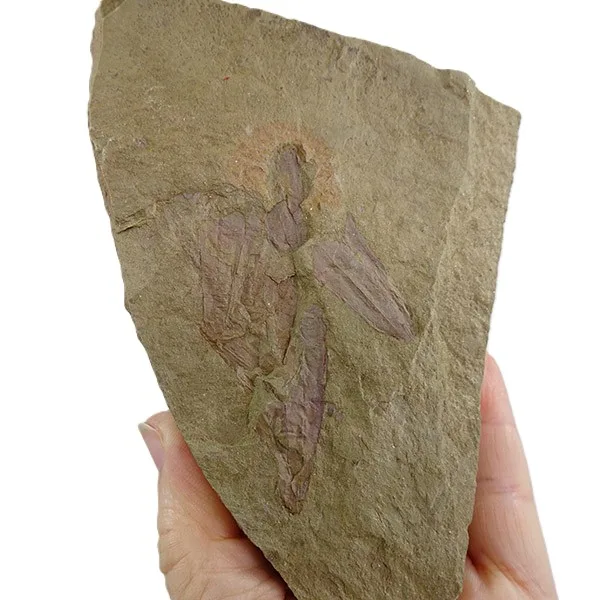
Archaeoconularia sp.
65,00 €
System: Ordovician.
Stage: Tremadocian – Floiense.
Formation: Fezouata.
Origin: Zagora, Morocco.
Measurements: 12 cm x 10 cm x 4.3 cm
1 in stock
The conularias are Medusozoic cnidarians, belonging to the class Scyphozoa (from Greek skyphos, cup, and zoon, animal).
Cnidarians are characterized by the presence of tentacles, radial symmetry and two structural types: polyp phase (fixed) and medusa phase (free).
The conularians are an extinct Paleozoic group, which lived from the late Ediacara to the Triassic. They have a pointed conical shell, with a square section, the external surface has fine grooves, both longitudinal and transverse. Most of the conularias were fixed to the bottom by the sharpest end and the upper end, open, is the mouth that was surrounded by a crown of tentacles.
In the Fezouata shales, conularids such as Archaeoconularia They are often found in monospecific mass associations (many individuals of the same species together), suggesting that They lived in colonies grouped on the seabed.
Archaeoconularia is, therefore, an important piece to understand the biodiversity and ecology of the high-latitude marine ecosystems of Gondwana during the great Ordovician biodiversification event.