
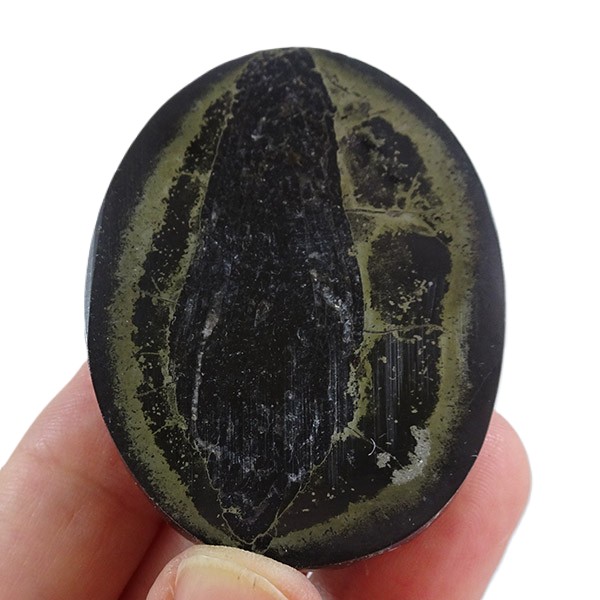
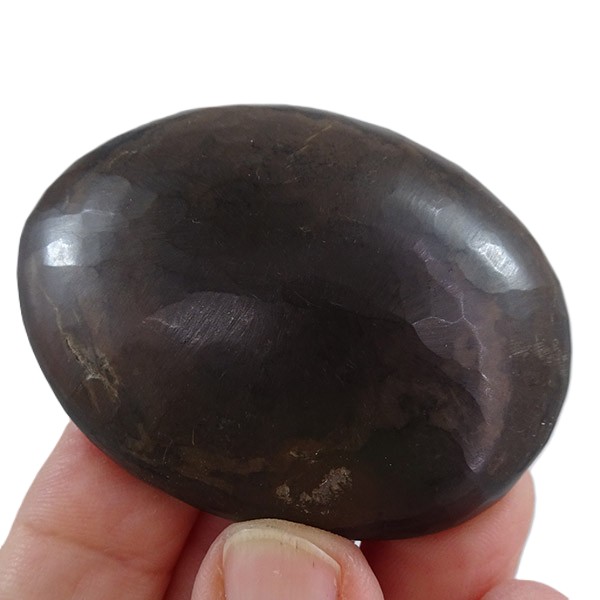
Coprolite of Megalichthys sp.
36,00 €
System: Carboniferous.
Subperiod: Mississippian.
Origin: Lothian, Scotland.
Measurements: 5.7 cm x 4.3 cm
1 in stock
Coprolite in pyrite within a septaria.
These concretions formed on the beds of ancient lakes or estuaries, where decaying organic matter (such as fish excrement) altered the local chemical microenvironment. When environments are anaerobic (without oxygen), bacteria are activated that use the sulfate dissolved in the water as a source of energy. This metabolic process releases hydrogen sulfide, which reacts with the iron in the sediment to form insoluble minerals such as pyrite, covering or replacing part of the coprolite with this mineral. With the compaction of the surrounding sediment, carbonates (frequently siderite or calcite) accumulated around the organic core, forming a nodule. The contraction and loss of water caused internal cracking of the nodule. These cracks were later filled with minerals such as calcite and pyrite, creating a septaria structure. When cut and polished, these nodules are highly prized by collectors, as they often reveal remains of fossilized food, including fish scales and perfectly preserved bone fragments.
Megalichthys is an extinct genus of prehistoric sarcopterygian fish (lobe-finned or fleshy-finned fish). They are characterized by having lobed fins largely made of meat. All living tetrapods evolved from these.