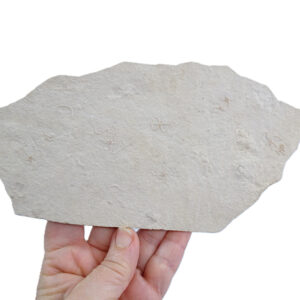

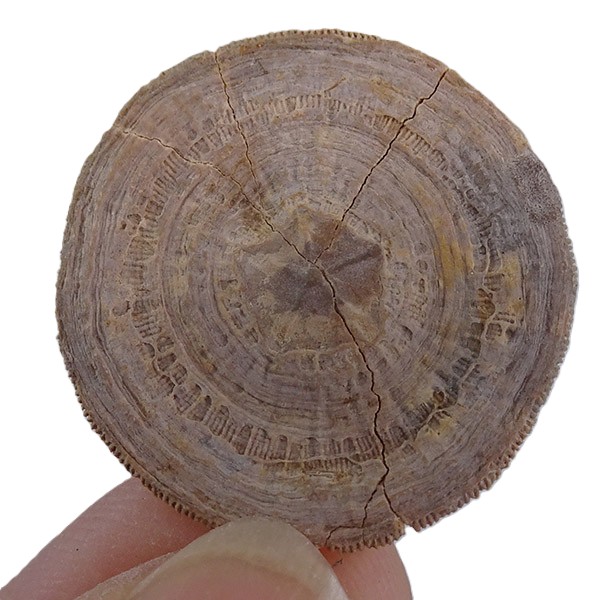
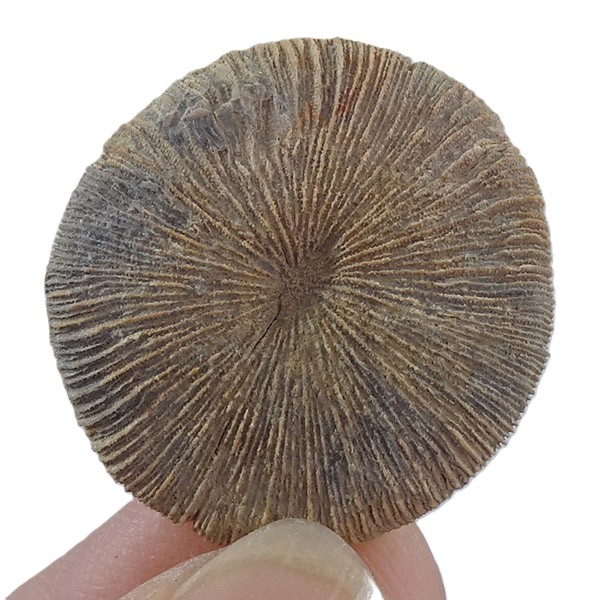
Cycloseris barcelonensis and Asterocyclina stellata stellata
9,00 €
Series: Eocene.
Stage: Priabonian.
Origin: southern Europe.
Measurements: 2.5 cm x 2.5 cm
1 in stock
Cycloseris It is a coral from the Eocene, which seems to have established symbiosis with Asterocycline, an Eocene foraminifera with pentagon morphology.
Recent studies reveal that symbiosis already existed in corals 385 million years ago.
Most corals form an association with unicellular dinoflagellate microalgae of the family Symbiodiniaceae, from which they obtain the necessary nutrients for their metabolism, growth, reproduction and development, as well as their characteristic brown color. This microalgae-coral interaction is known as mutualistic symbiosis, since it lasts over time and offers benefits for both species.
The microalgae that are associated with corals carry out photosynthesis, and thanks to their photosynthetic pigments (chlorophyll and carotenoids) they are yellow-brown in color. These symbiotic microalgae can live inside the cells of various cnidarians – which is why they are called endosymbionts, but they can also live freely in water. When they live in symbiosis, they provide their host with carbon sources (mainly glycerol and glucose) derived from the photosynthesis they carry out, and in exchange they receive some nutrients (nitrogen and phosphorus), CO₂, and a privileged position with access to the sun and safe from predators.
The coral-microalgae symbiosis is crucial for the life and maintenance of the coral, and therefore the entire reef. There is evidence that this symbiosis has occurred for 240 million years, and it is so close that it is proposed that both organisms have evolved together and that it was even thanks to their association that coral reefs were able to form. This association is so important that when the microalgae abandon the coral, or are unable to carry out photosynthesis, the coral dies and loses its color –is whitened–, since the algae's photosynthetic pigments are what give it its color.