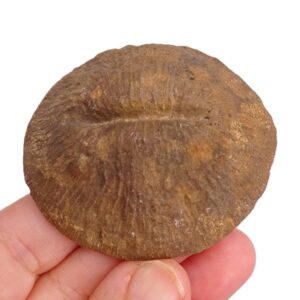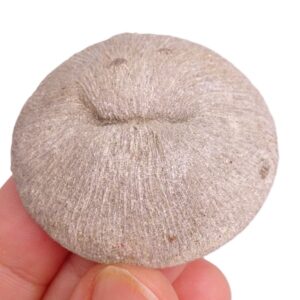

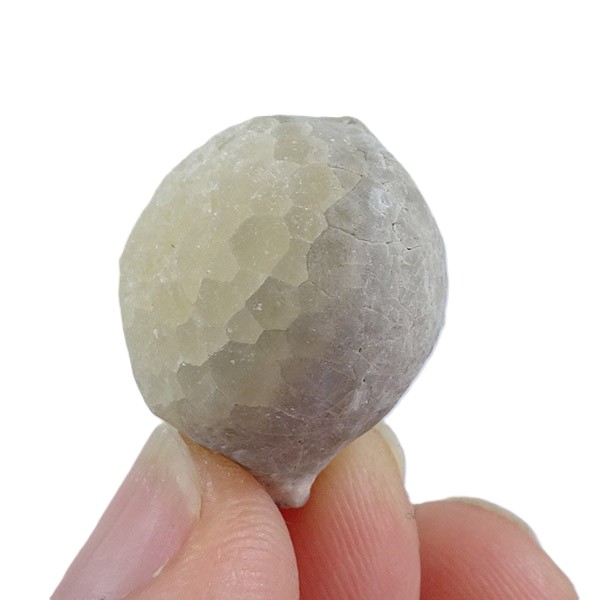
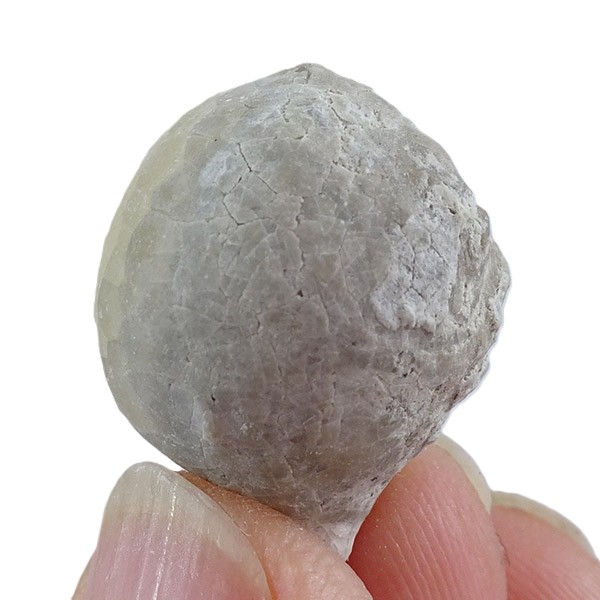
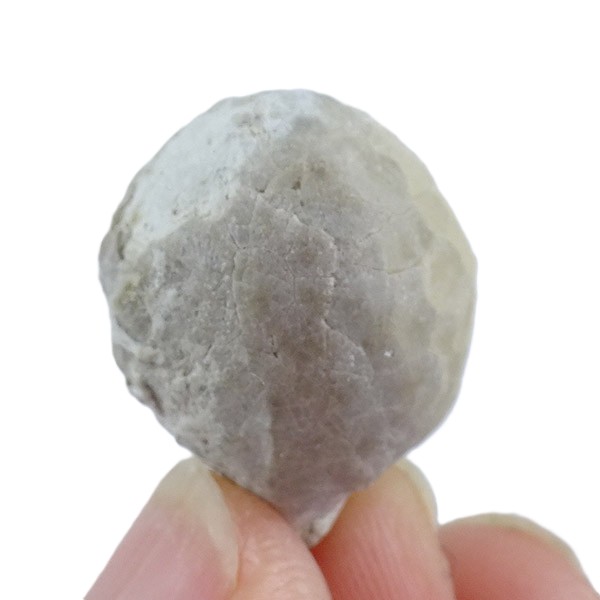
Echinosphaerites aurantium
35,00 €
System: Middle Ordovician.
Aseri Horizon.
Origin: Volkhov River, near Saint Petersburg, Russia.
Measurements: 2 cm x 1.8 cm
1 in stock
Echinosphaerites It is one of the rhombiferous cystoid echinoderms who lived in the early Ordovician to middle North America and Europe.
The cystoids resemble small clubs (cyste). Cystoids were sessile suspension feeders, feeding by water filtration. Like most echinoderms, its body was protected by a set of interlocking calcareous plates, forming a very solid, ovoid theca, structured in an imperfect pentarradial (more rarely triradial) symmetry visible mainly through the five ambulacral areas and perforated by many pores, probably respiratory.
The mouth was located in the center, surrounded by five structures that radiate like petals, of different shapes, and that support highly branched filter organs called brachioles, which allowed the cystoids to filter the water to trap the plankton on which they fed. The anus was on one side of the teak.
The theca was at the end of a rod made of nested circular rods (as in stemmed crinoids), the other end of the stem was attached to the substrate.