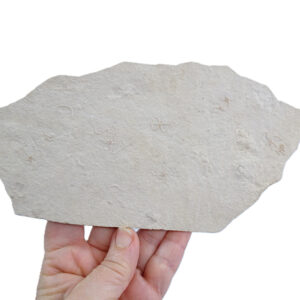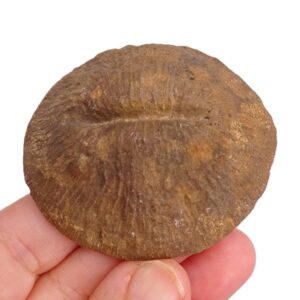


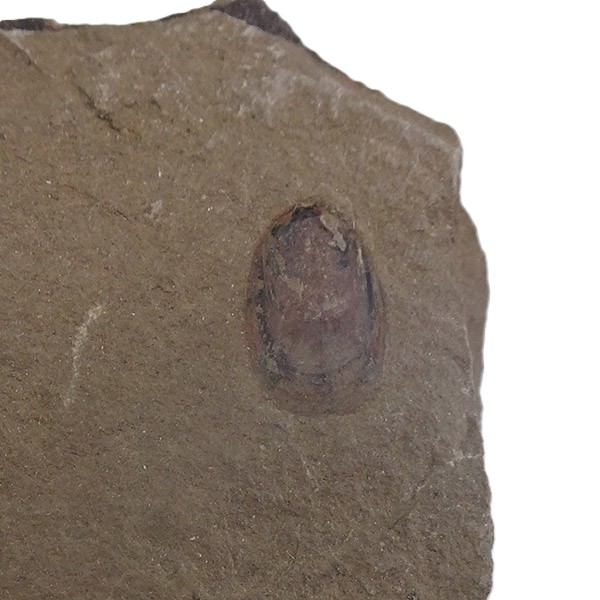
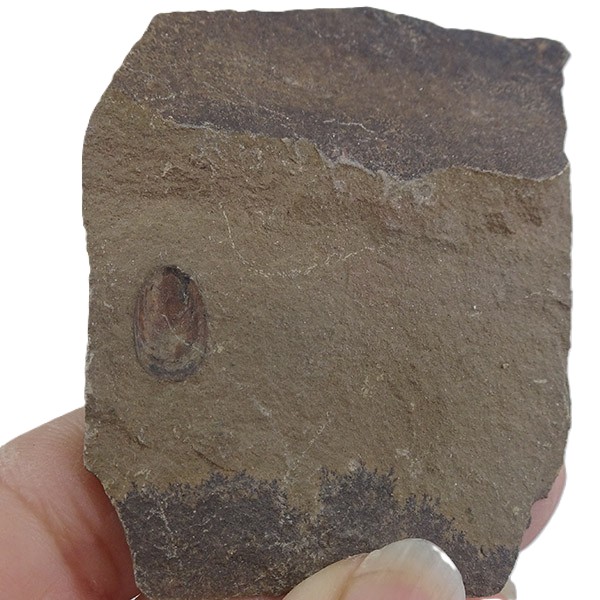
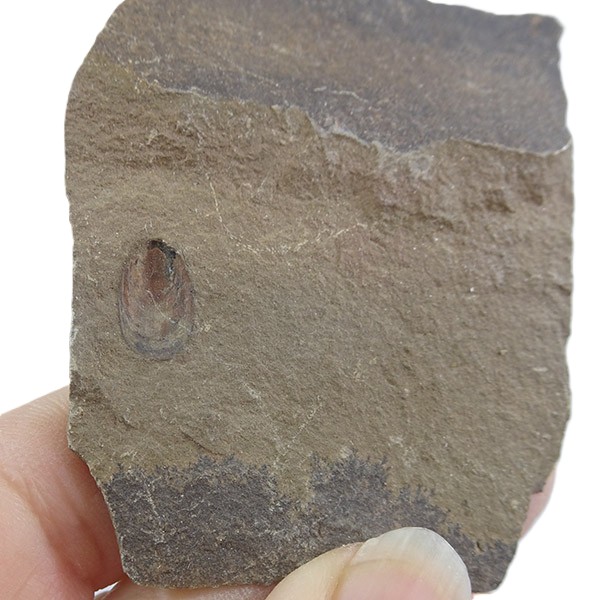
Lingularia sp. SOLD
System: Ordovician.
Stage: Tremadocian.
Formation: Fezouata.
Origin: Zagora, Morocco.
Piece measurements: 7 cm x 5.5 cm and 5.5 cm x 4.7 cm
The lingulates (Lingulata) They are a class of brachiopods, being the oldest brachiopods that exist from the beginning of the lower Cambrian period (541 million years ago) to the present and morphologically very stable, the shells are almost identical from their earliest appearance to the present.
Lingulates have tongue-shaped shells (hence the name Lingulata, from the Latin word language) with a long fleshy peduncle, or pedicle, with which the animal burrows into sandy or muddy sediments, using the ciliated lophophore to feed.
The shells of lingulates are composed of a combination of calcium phosphate, proteins and chitin. This is different from the shells and tubes that protect mollusks and other marine organisms, whose shells are made of calcium carbonate. The two valves of the lingulates are almost symmetrical and are held together by a complex musculature, since they lack an articulated hinge system. with teeth and pits (inarticulate brachiopods).
The Fezouata deposits, near the Moroccan city of Zagora, are providing a rich sample of a fauna similar, although later in time, to the famous Burgess Shale (Canada). We are talking about fossils between 480 and 472 million years old. The age indicates that the Burgess Shale type communities were not restricted, as was believed, to the early stages of the Cambrian and then suddenly disappeared, but rather they survived much longer, coexisted with the later fauna and would be the normal type of deep sea fauna throughout the planet. So Morocco was an ocean and was over the South Pole.