
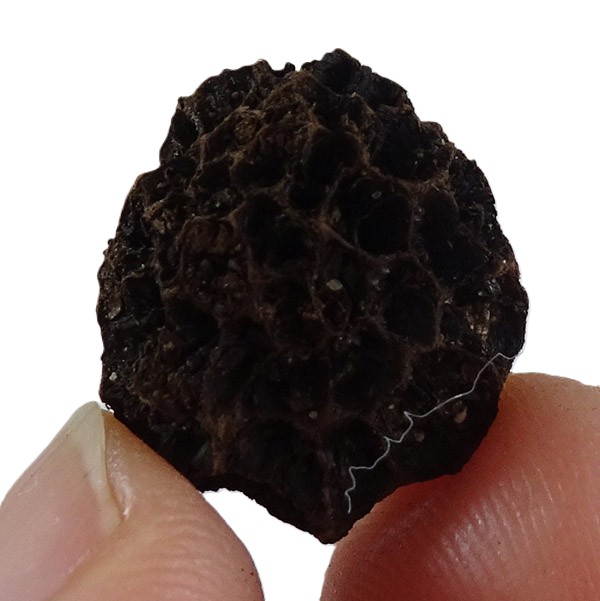
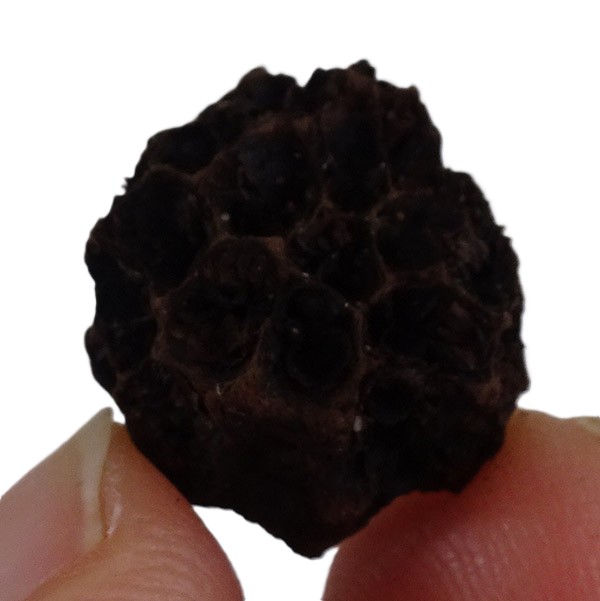
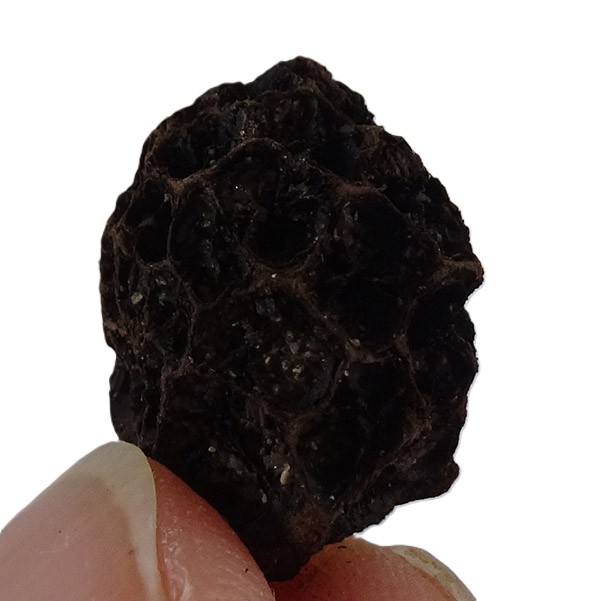
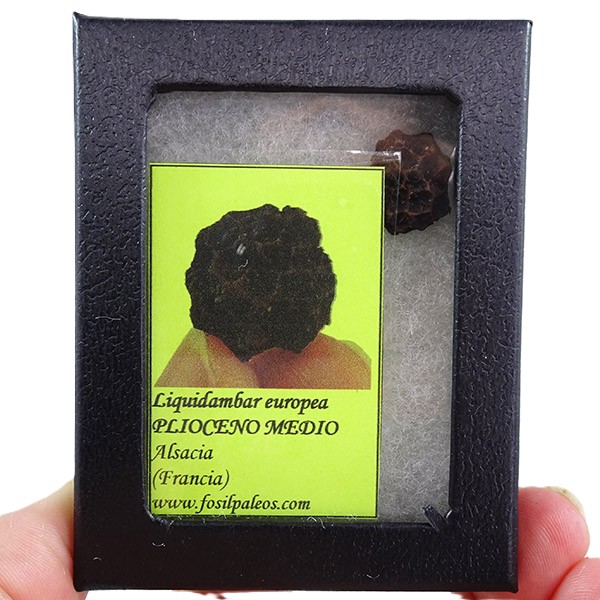
European Liquidambar SOLD
Series: Pliocene.
Origin: Alsace, France.
Measurements: 1.6 cm x 1.5 cm
Syncarpous fruit, from an old collection. The syncarpus are not multiple fruits since they are formed from individual flowers that have more than one pistil. These are known as aggregate fruits (liquidambar is an aggregate of capsules).
During the Pliocene (between 5.3 and 2.6 million years ago), the Alsace region It experienced a warm-temperate climate with mixed forests and intense fluvial sedimentation in the Rhine Basin. The Pliocene marked the transition from a warm Tertiary to the colder conditions of the Pleistocene (glaciations).
Characteristics of the flora of the Alsatian Pliocene:
- Hazelnuts (Corylus) and you have (Fagus): deciduous trees adapted to the ambient humidity and temperate soils in the valleys and lowlands.
- Walnut (Juglans): integrated into mixed forests of the plains or mid-slopes under summer humidity conditions.
- Caria (Carya): genus of trees of the Juglandaceae family, part of the mixed mesophilic forests under summer humidity conditions.
- Spruce trees (Spruce) and pines (Pinus): dominant conifers in higher altitude areas or poor soils.
- Storaxes (Styrax): relicts of a more temperate/subtropical character that still resisted in favorable refuges before their final retreat from Central Europe.
- Sweetgum (Liquidambar)It acted as a thermophilic component of mid-latitudes, prior to the great Pleistocene glaciations that eliminated the genus Liquidambar from the central European region.
The box is included in the price.