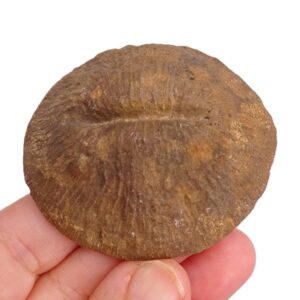

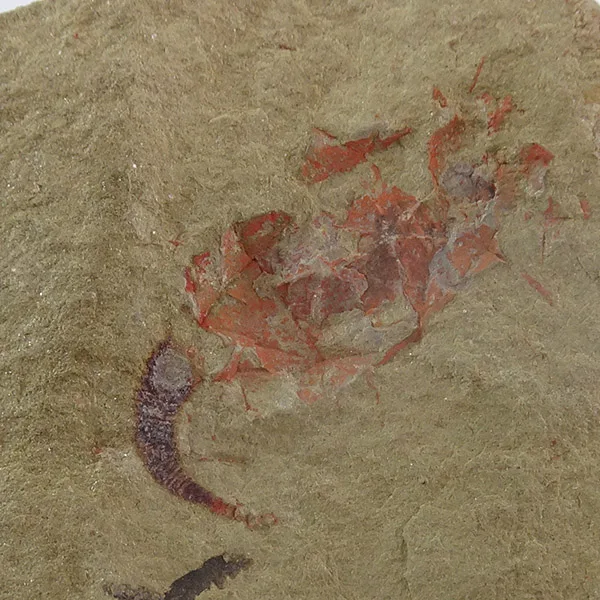
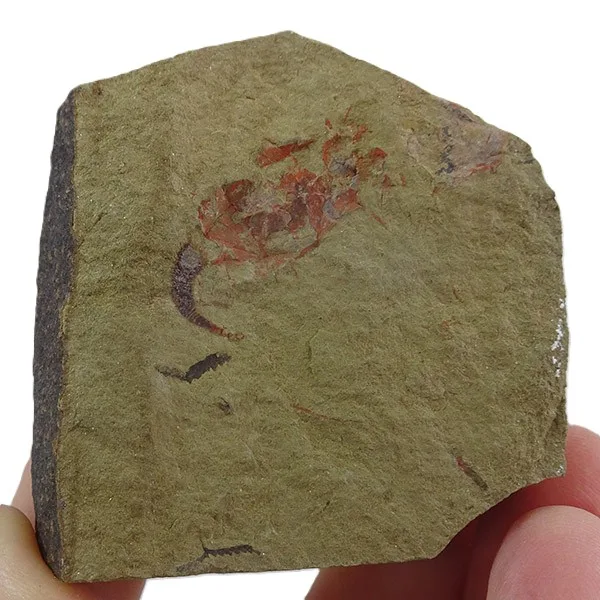
Macrocystella azaisi
38,00 €
System: Ordovician.
Stage: Tremadocian.
Formation: Fezouata.
Origin: Zagora, Morocco.
Piece measurements: 6 cm x 5.5 cm
1 in stock
Macrocystella It was a rhombiferous cystoid.
The rhombiferous (Rhombifera) are an extinct group of pelmatozoan echinoderms (provided with a peduncle, at least in the larval state, with the mouth located on the same side as the anus.) that lived during the Paleozoic era, appearing in the Ordovician and becoming extinct in the Devonian. They belong to the class of cystoids that resemble small clubs (cyste) and are characterized by having a body (theca) protected by calcareous plates with unique rhombus-shaped respiratory structures. The mouth was located in the center, surrounded by five structures that radiate like petals, of different shapes, and that support highly branched filter organs called brachioles, which allowed the cystoids to filter the water to trap the plankton on which they fed. The anus was on one side of the teak.
The theca was at the end of a rod made of nested circular rods (as in stemmed crinoids), the other end of the stem was attached to the substrate.
The cystoids were:
- Suspensivores: they fed by filtering water.
- sessile: they lived attached to the seabed by a stem.
The Fezouata deposits, near the Moroccan city of Zagora, are providing a rich sample of a fauna similar, although later in time, to the famous Burgess Shale (Canada). We are talking about fossils between 480 and 472 million years old. The age indicates that the Burgess Shale type communities were not restricted, as was believed, to the early stages of the Cambrian and then suddenly disappeared, but rather they survived much longer, coexisted with the later fauna and would be the normal type of deep sea fauna throughout the planet. So Morocco was an ocean and was over the South Pole.