
O. Crassiclitellata and O. Diptera
480,00 €
Series: Oligocene-Miocene.
Origin: La Cumbre mine, Dominican Republic.
Mass: 3.4g
Measurements: 3.2 cm x 2.9 cm
1 in stock
Dominican amber is a fossil resin of plant origin that comes from the legume Hymenaea protera, dated between 25 and 40 million years ago.
Dominican amber differs from Baltic amber by being more transparent, and by having a greater number of fossil remains.
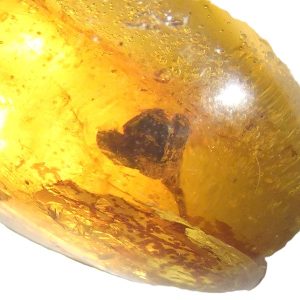
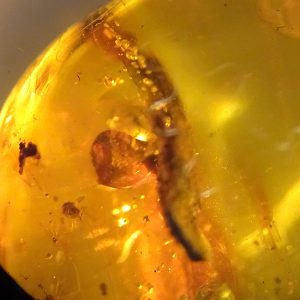
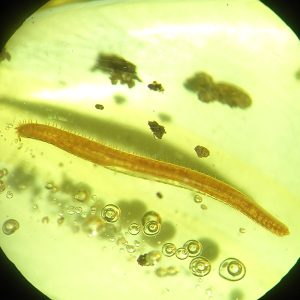
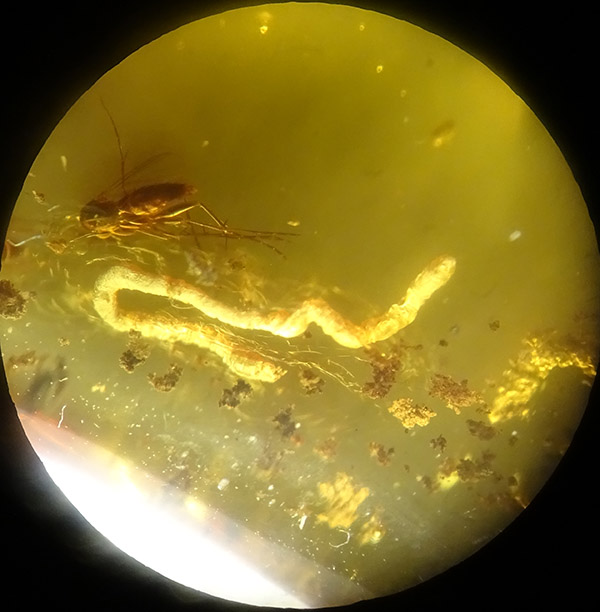
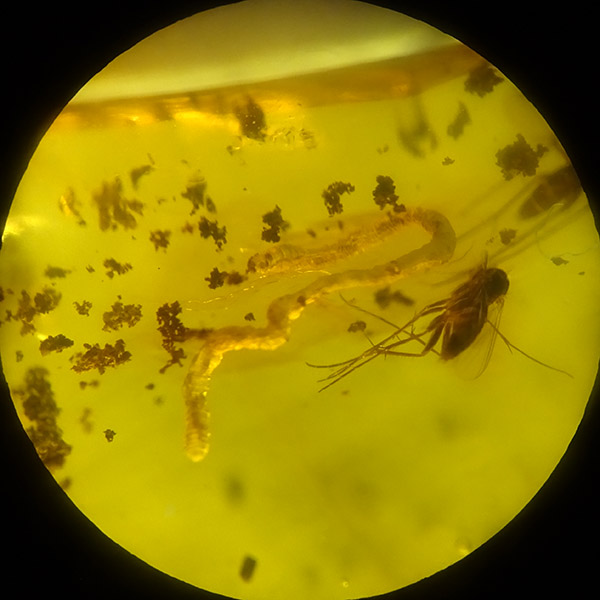
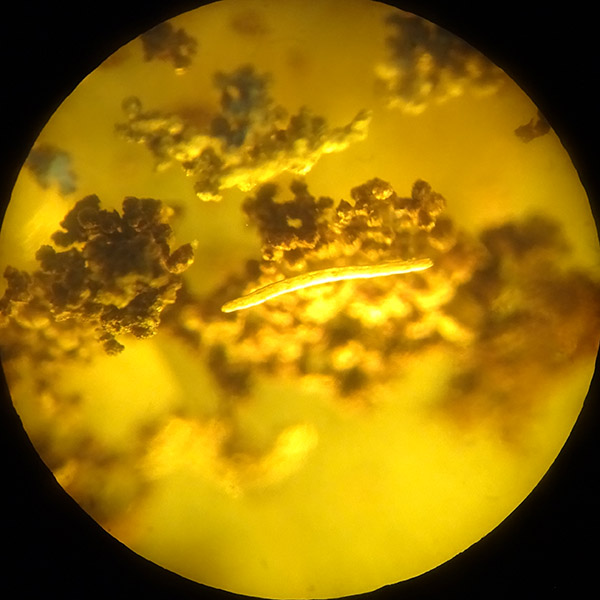
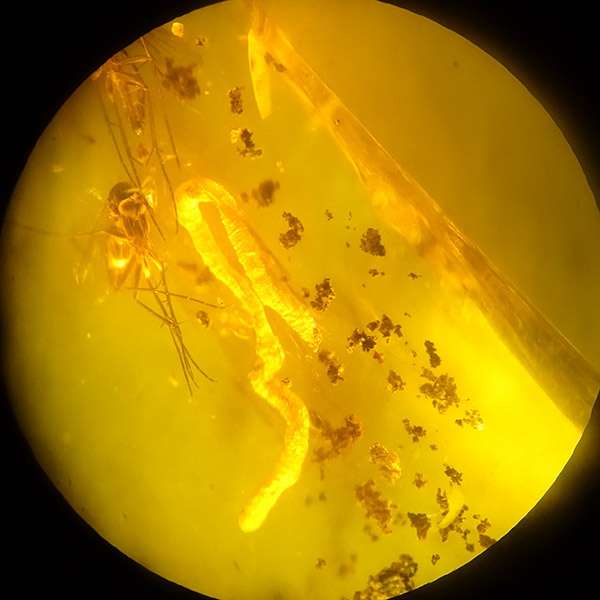
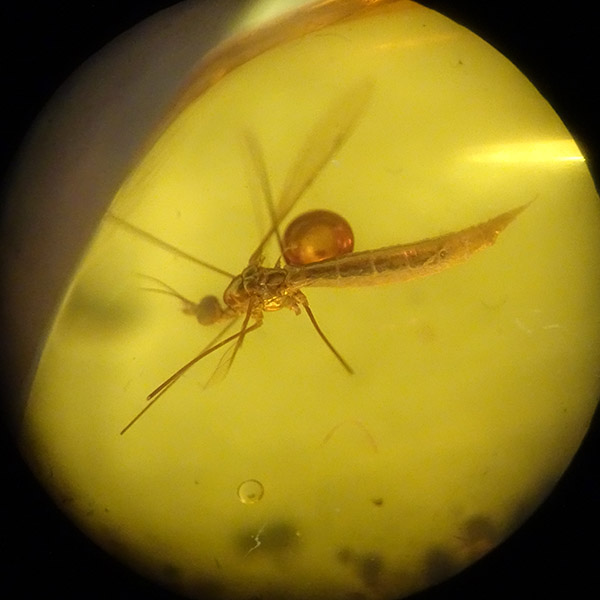
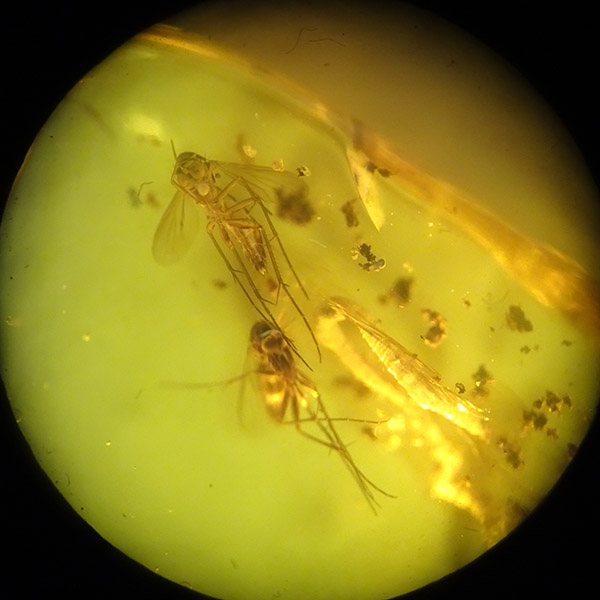
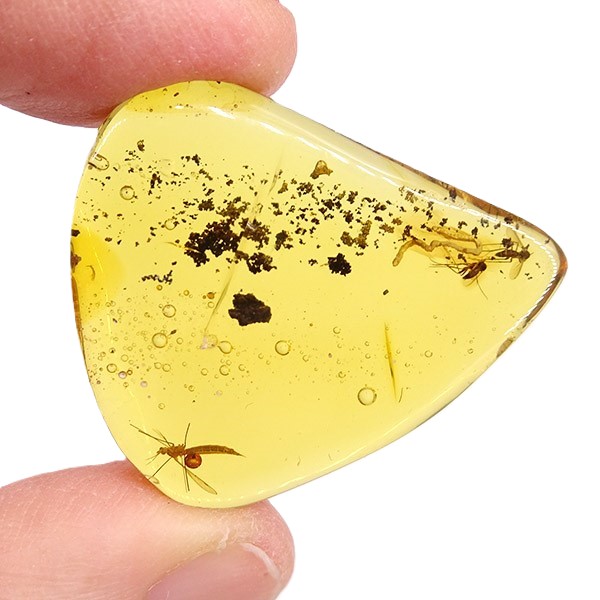
This piece contains two worms of land belonging to the order Crassiclitellata, a mosquito and several flies belonging to O. Diptera.
The earthworm belongs to the Lumbricidae family, they are annelids (cylindrical worms with rings). They are the group of oligochaetes terrestrial worms that evolutionarily descend from aquatic worms, so they still maintain characteristics typical of the environment, such as cutaneous respiration and dependence on humidity, developing systems of resistance to desiccation, as an adaptation to the terrestrial environment.
The worms dig galleries in the floor and they go out at night to explore their surroundings. They are very beneficial animals: while they dig to make their tunnels, they ingest particles of floor and digest any organic remains. In wet seasons they drag leaves inside the earth to feed. With this they remove, aerate and enrich the soil, helping to keep it fertile by raising phosphorus y potassium from the subsoil and by expelling its own nitrogenous waste. The most favorable time for worms is when the weather is humid and warm, when they come to the surface to procreate.