
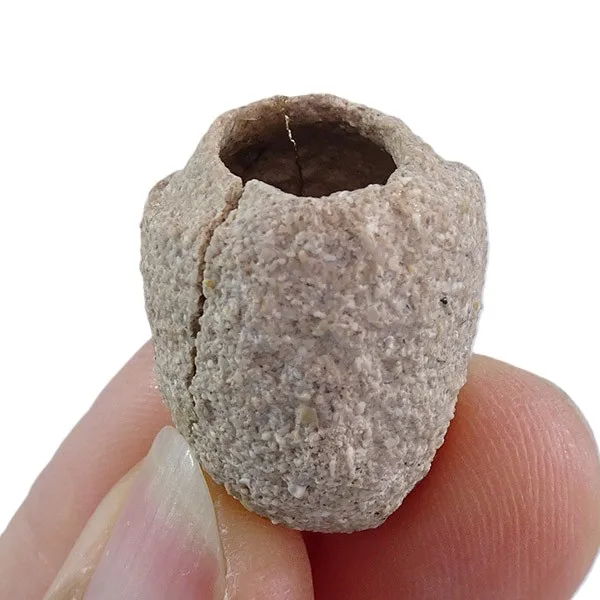
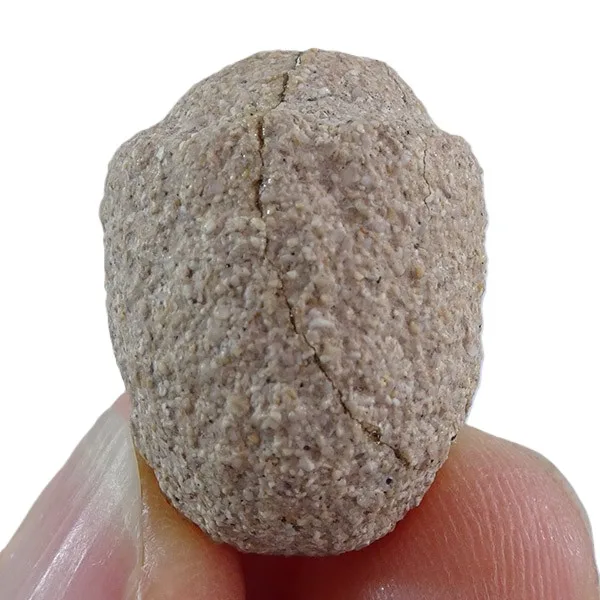
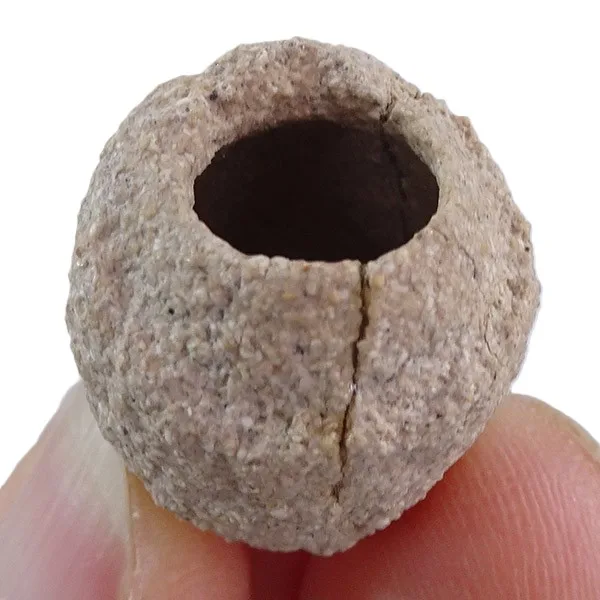
Palmiraichnus castellanosi
10,00 €
System: Quaternary.
Series: Holocene.
Origin: near Mala, Lanzarote, Spain.
Measurements: 2.4 cm x 1.9 cm
1 in stock
Fossil bee cells, attributable to the ichnospecies Palmiraichnus castellanosi, are recorded in the Pleistocene and Holocene of the easternmost Canary Islands, which was originally described in the Paleogene of Uruguay. This record constitutes the first documented evidence of bees and hymenoptera in the Quaternary of the Canary Islands and the first for this ichnospecies in Africa. Compared to current cells, the potential builders are bees of the genus Andrena. The data suggest that five species may have produced P. castellanosi in the Canary Islands. One in Lanzarote in the Holocene, another in the south of Fuerteventura in the Upper Pleistocene, two in Gran Canaria and another on the islet of Montaña Clara during the Middle Pleistocene. A high level of reproductive success was probably favored by the lack of predators or parasites and optimal environmental conditions, at least in the Pleistocene. During the Pleistocene, the abundance of P. castellanosi in the lowlands suggests a rich endemic shrub flora and paleoclimatic conditions similar to those of today, but probably with greater humidity. The land snail assemblage associated with low densities of P. castellanosi in the Holocene mid-altitude belt suggests a cool, humid paleoenvironment, less favorable for those of P. castellanosi.