
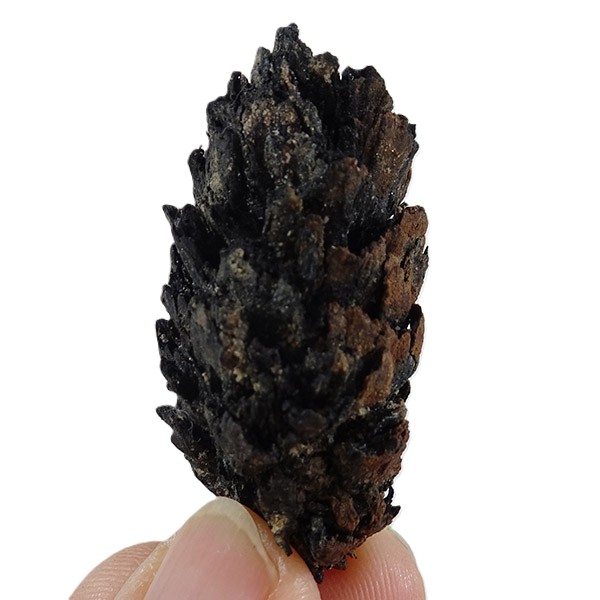
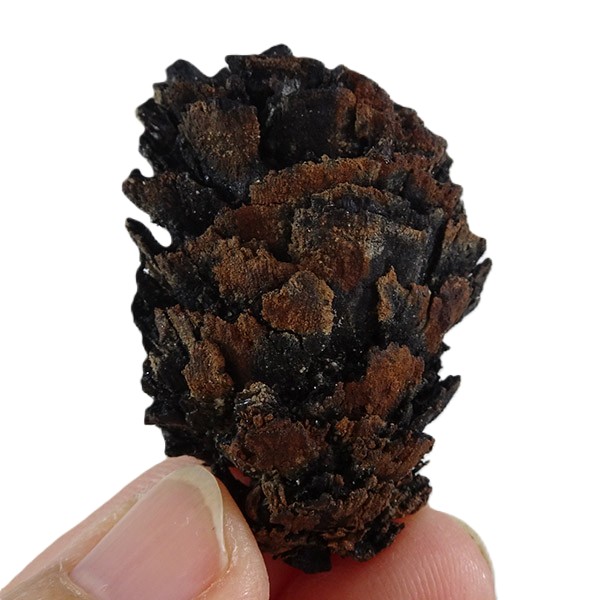
Spruce broad-scaled
68,00 €
Series: Pliocene.
Origin: Alsace, France.
Medidas: 4,4 cm x 2,9 cm x 2 cm
1 in stock
Female inflorescence or cone Spruce, From an old collection.
During the Pliocene (between 5.3 and 2.6 million years ago), the Alsace region It experienced a warm-temperate climate with mixed forests and intense fluvial sedimentation in the Rhine Basin. The Pliocene marked the transition from a warm Tertiary to the colder conditions of the Pleistocene (glaciations).
Characteristics of the flora of the Alsatian Pliocene:
- Hazelnuts (Corylus) and you have (Fagus): deciduous trees adapted to the ambient humidity and temperate soils in the valleys and lowlands.
- Walnut (Juglans): integrated into mixed forests of the plains or mid-slopes under summer humidity conditions.
- Caria (Carya): genus of trees of the Juglandaceae family, part of the mixed mesophilic forests under summer humidity conditions.
- Spruce trees (Spruce) and pines (Pinus): dominant conifers in higher altitude areas or poor soils.
- Storaxes (Styrax): relicts of a more temperate/subtropical character that still resisted in favorable refuges before their final retreat from Central Europe.
- Sweetgum (Liquidambar)It acted as a thermophilic component of mid-latitudes, prior to the great Pleistocene glaciations that eliminated the genus Liquidambar from the central European region.
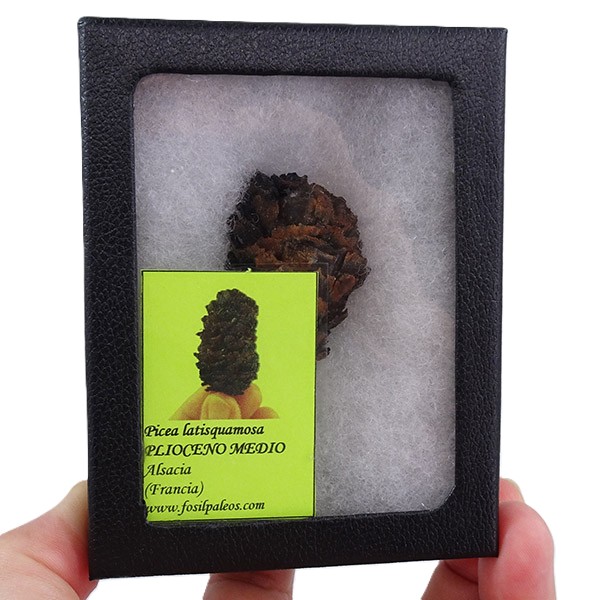
The box is included in the price.