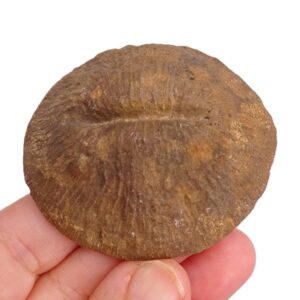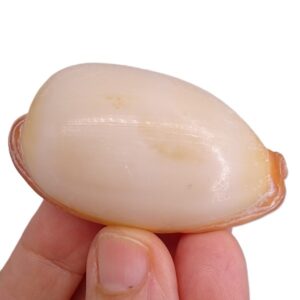

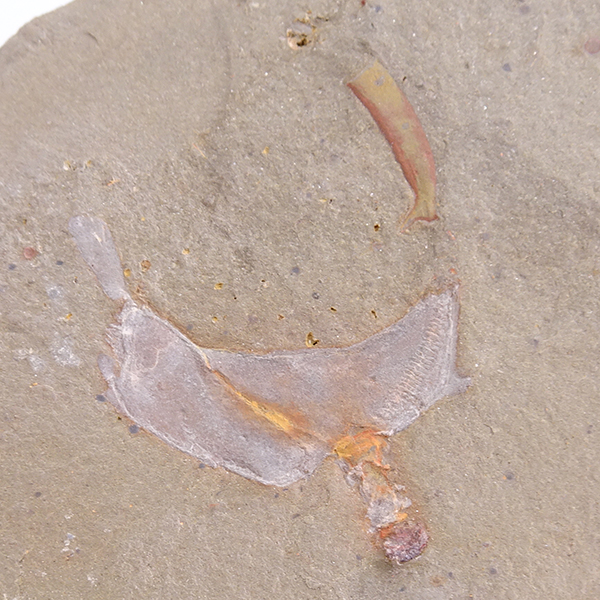
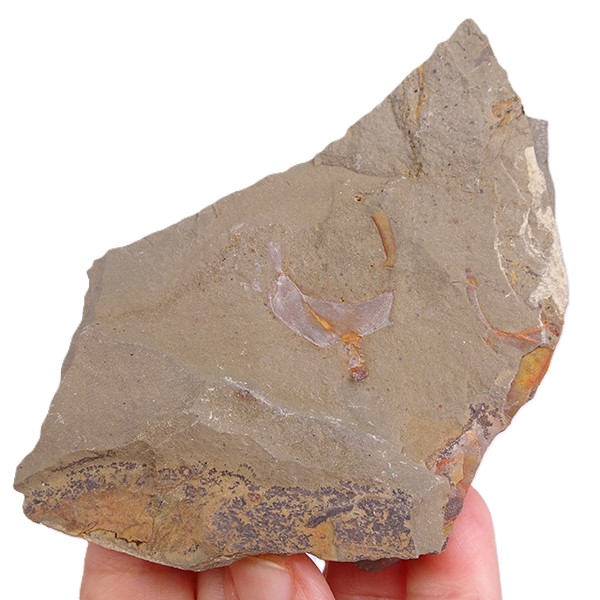
Thoralicystis zagoraensis
35,00 €
System: Ordovician.
Stage: Tremadocian.
Formation: Fezouata.
Origin: Bou Izargane, Beni Zoli, Zagora, Morocco.
Plate measurements: 10 cm x 8.6 cm
1 in stock
Thoralicystis was a stylophorous carpoid (homalozoo) echinoderm.
The Homalozoans (Homalozoa, from the Greek homalós, "flat" and zoon, "animal") or carpoids (Carpoidea) are an extinct subphylum of echinoderms that lived between the Middle Cambrian and Late Carboniferous.
Unlike most echinoderms, homalozoans lack pentaradial symmetry and are asymmetric or have bilateral symmetry. The body, covered with plates, had two regions: the teak and the classroomcophore.
Theak was often formed by a marginal ridge of long, elongated plates surrounding a central area composed of numerous smaller plates.
The terminal appendage, called aulacophore, was also covered with plates. It is unknown what it was used for; Several hypotheses have been proposed:
- It could be a stem that fixed the animal to the substrate (as in crinoids).
- It could have been used to obtain food.
- It would be a tail used for swimming (as in primitive chordates).
The Fezouata deposits, near the Moroccan city of Zagora, are providing a rich sample of a fauna similar, although later in time, to the famous Burgess Shale (Canada). We are talking about fossils between 480 and 472 million years old. The age indicates that the Burgess Shale type communities were not restricted, as was believed, to the early stages of the Cambrian and then suddenly disappeared, but rather they survived much longer, coexisted with the later fauna and would be the normal type of deep sea fauna throughout the planet. So Morocco was an ocean and was over the South Pole.
The Fezouata deposits, near the Moroccan city of Zagora, are providing a rich sample of a fauna similar, although later in time, to the famous Burgess Shale (Canada). We are talking about fossils between 480 and 472 million years old. The age indicates that the Burgess Shale type communities were not restricted, as was believed, to the early stages of the Cambrian and then suddenly disappeared, but rather they survived much longer, coexisted with the later fauna and would be the normal type of deep sea fauna throughout the planet. So Morocco was an ocean and was over the South Pole.