
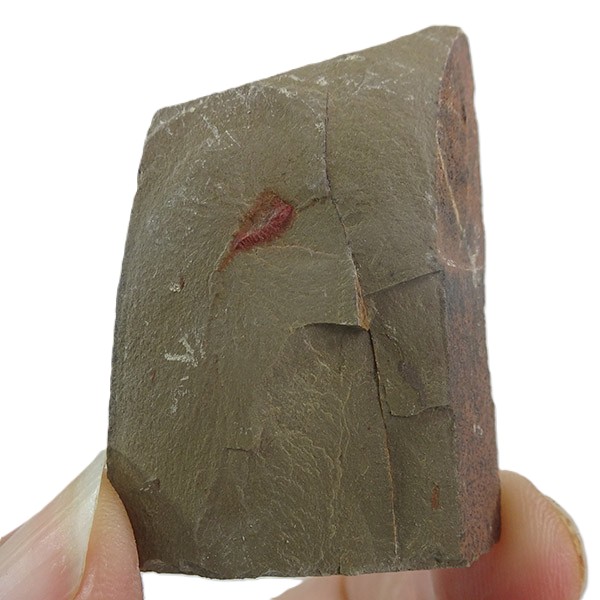
Setapedites abundantis
20,00 €
System: Lower Ordovician.
Floor: Tremadocian-Floian.
Formation: Fezouata.
Origin: Zagora, Morocco.
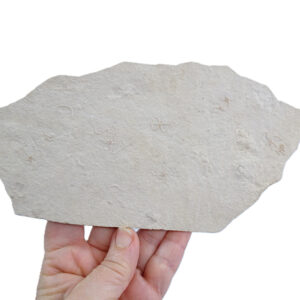
Plate measurements: 4.4 cm x 3 cm
Setapedites measurements: 0.8 cm x 0.3 cm
Setapedites was a chelicerate.
Chelicerates owe their name to the presence of mouth appendages, called chelicerae, which have functions generally related to feeding and defense against predators.
Chelicerates are a clade of arthropods that includes horseshoe crabs, scorpions, spiders, mites y ticks, as well as the extinct eurypterids (sea scorpions) and chasmataspidids. Little is known about the origin and early evolution of the body distribution of chelicerates, due to the scarce fossil record.
Setapedites from the Lower Ordovician (approx. 478 million years) fills the anatomical gap between chelicerates and Cambrian stem taxa y reveals the diversity and early evolution of chelicerates.
https://www.researchgate.net/figure/Phylogenetic-position-of-Setapedites-abundantis-gen-et-sp-nov-among-panchelicerates_fig6_380394024