
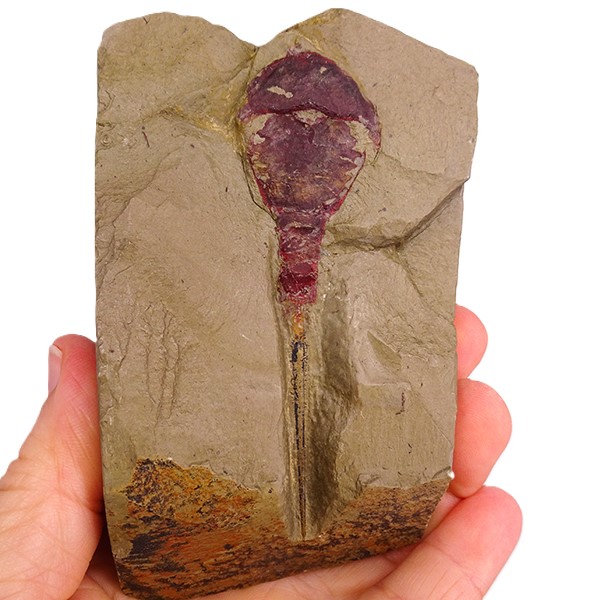
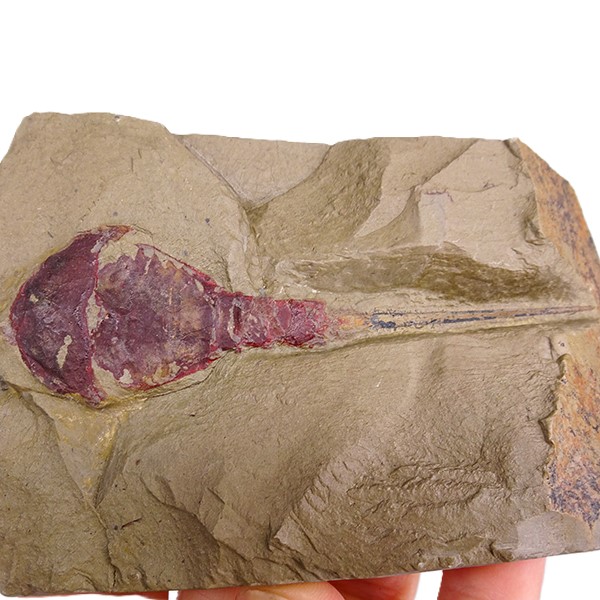
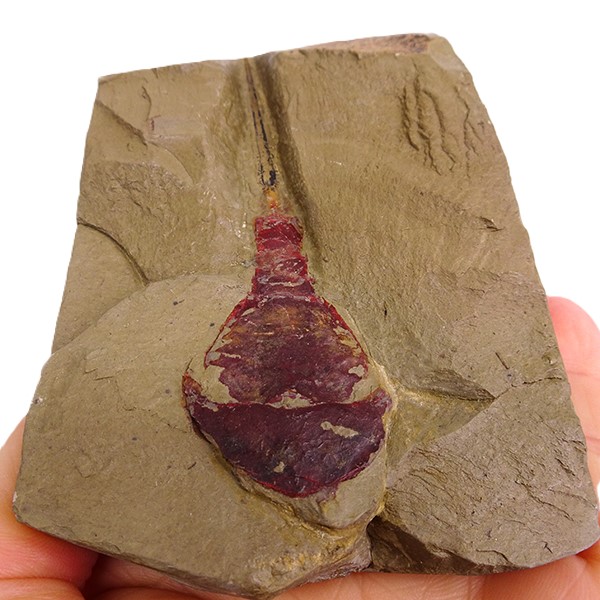
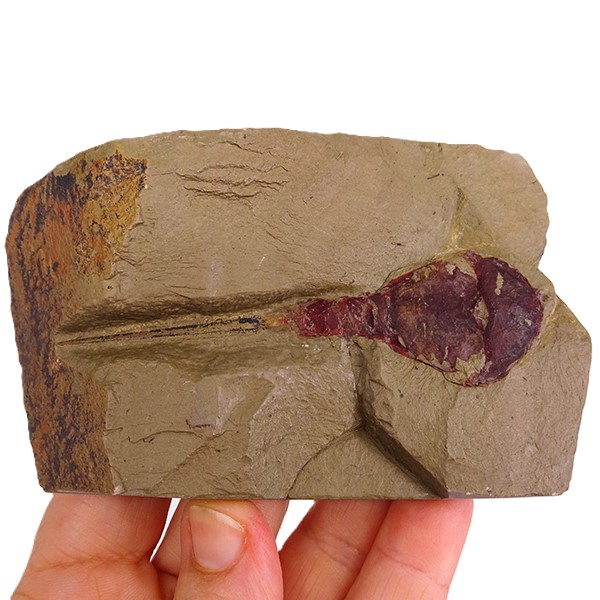
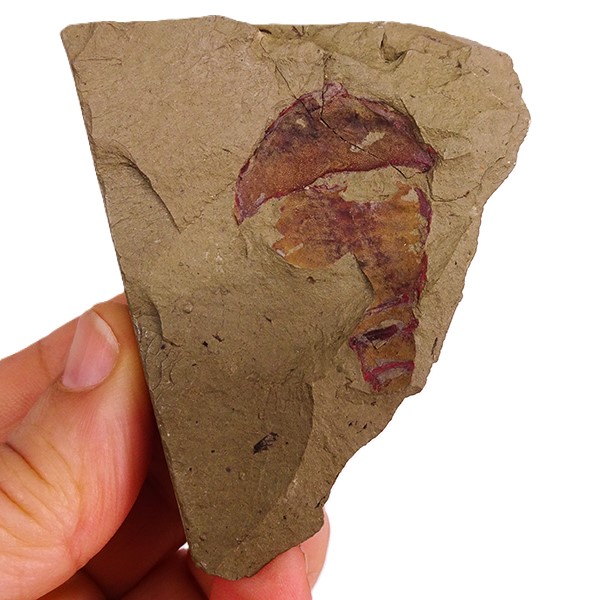
Xiphosura
690,00 €
System: Ordovician.
Stage: Tremadocian.
Formation: Fezouata.
Origin: Bou Chrebeb, Zagora, Morocco.
Xiphosuro measurements: 9 cm x 2.7 cm
Plate measurements: 11 cm x 7.2 cm
The xiphosuras are an order of chelicerates marine. The best-known species is the horseshoe crab, although they are all very similar to each other. They are considered living fossils because they have evolved very little in their more than 475 million years of existence; They first appeared in the fossil record in the Ordovician lower.
They live on the seabed. They are carnivores and feed on mollusks, annelids and other marine invertebrates, and dead animals, which they hold and crumble with their chelicerae.
The Fezouata deposits, near the Moroccan city of Zagora, are providing a rich sample of a fauna similar, although later in time, to the famous Burgess Shale (Canada). We are talking about fossils between 480 and 472 million years old. The age indicates that the Burgess Shale type communities were not restricted, as was believed, to the early stages of the Cambrian and then suddenly disappeared, but rather they survived much longer, coexisted with the later fauna and would be the normal type of deep sea fauna throughout the planet. So Morocco was an ocean and was over the South Pole.