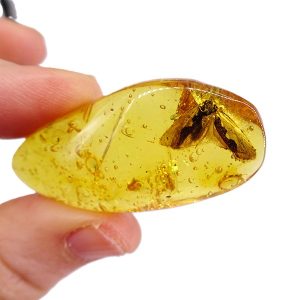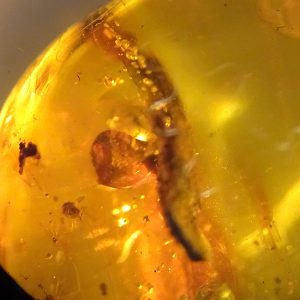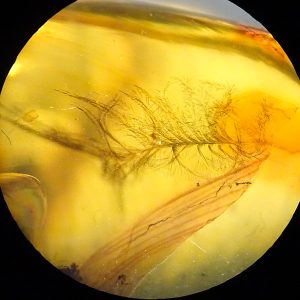

O. Psocoptera and O. Diptera SOLD
System: Oligocene-Miocene.
Origin: Mina la Cumbre, Dominican Republic.
Mass: 0.51g
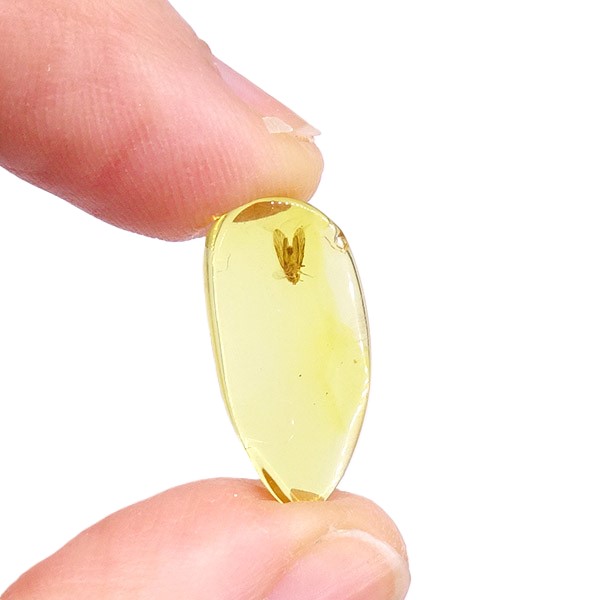
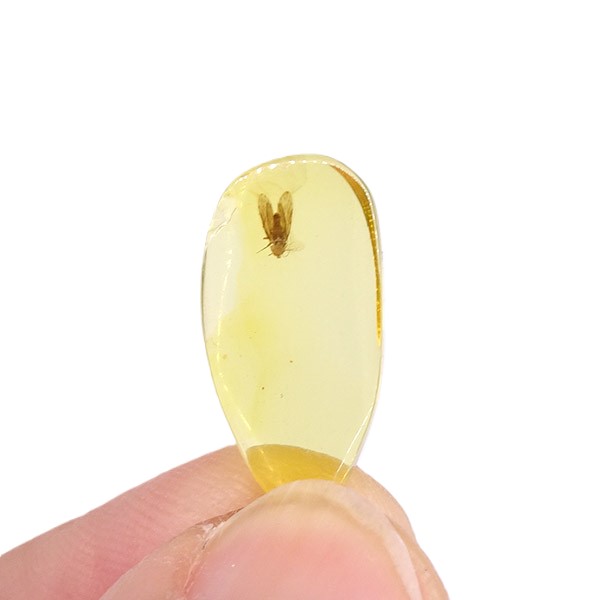
Measurements: 2 cm x 1 cm
Dominican amber is a fossil resin of plant origin that comes from the legume Hymenaea protera, dated between 25 and 40 million years old.
Dominican amber differs from Baltic amber by being more transparent, and by having a greater number of fossil remains.
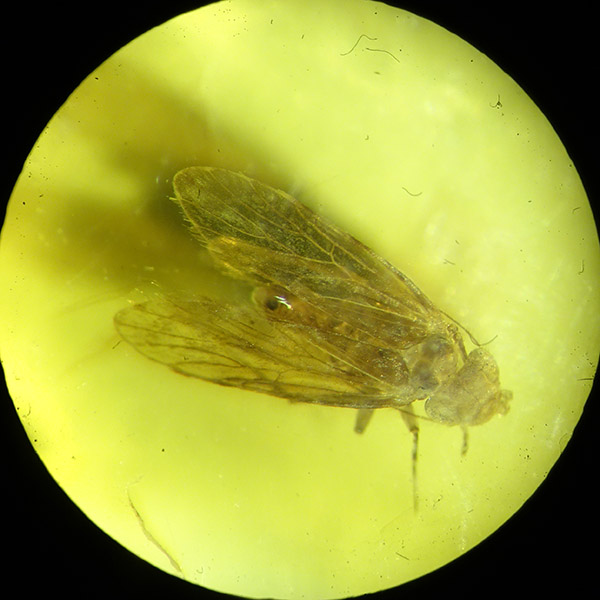
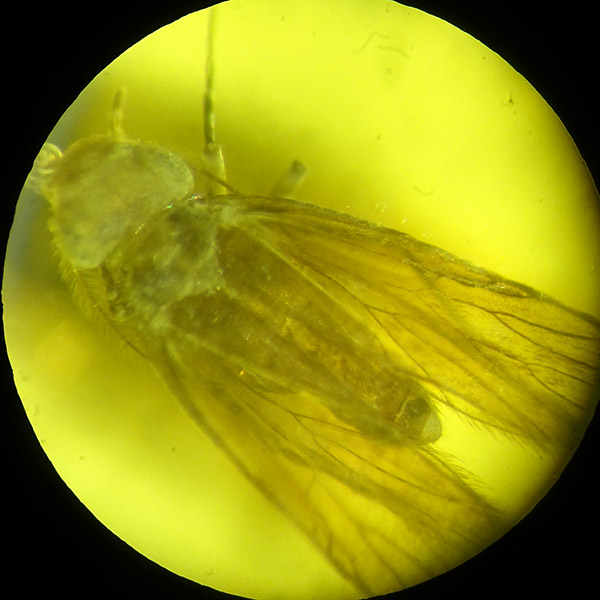
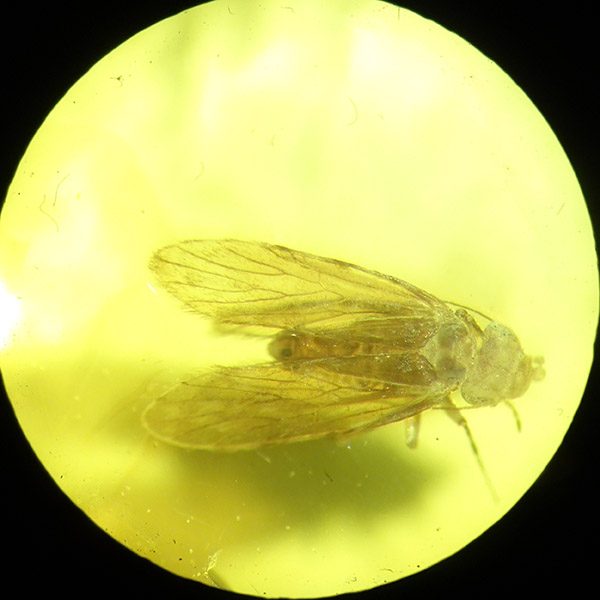
This piece contains a psocopter commonly known as book louse and bark louse.
Psocopters live in environments with high humidity, such as damp houses, or new houses before the walls dry, barns, cellars, etc. These species generally lack wings and are common in papers and books that are or were wet, which is why they are known as book lice, dust or straw lice.
The species that live in the countryside are found in plants, tree bark, under the stones... and generally they have well developed wings. The winged species have four membranous wings; occasionally the forewings are well developed and the hindwings are vestigial, while the hindwings far exceed the abdominal apex when the animal is at rest; In addition, the four wings remain in a roof when landing.
Psocopterans feed on various materials of plant and animal origin such as fungal mycelia, grains of cereals damaged, pollen, dead insects and insect eggs. Those that live among books feed on the fungi that grow on the glue.