
Teredolites clavatus and… SOLD
System: Cretaceous.
Series: Superior.
Stage: Cenomanian.
Origin: Hukawng Valley, Kachin State, Myanmar.
Mass: 0.74g
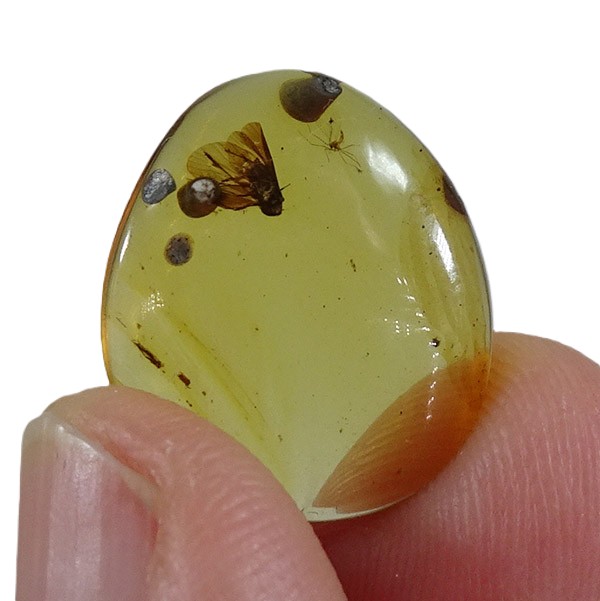
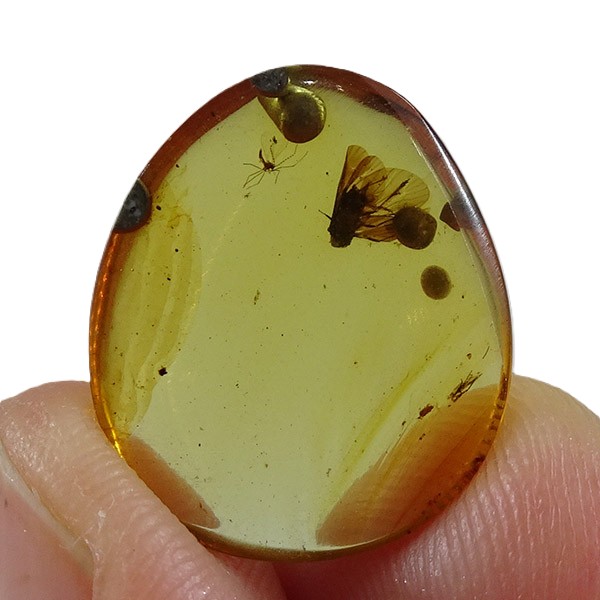
Piece measurements: 2 cm x 1.7 cm
Burmese amber also known as Burmite or Kachin amber dates back about 100 million years. This amber is of great paleontological interest due to the diversity of flora and fauna it contains as inclusions, especially arthropods but also birds, amphibians, reptiles, fragmentary remains of dinosaurs...
Burmese amber comes mainly from the fossilized resin of extinct conifers belonging to the Araucariaceae family (trees related to modern trees). Agathis either Araucaria), which lived in humid tropical forests during the Cretaceous period.
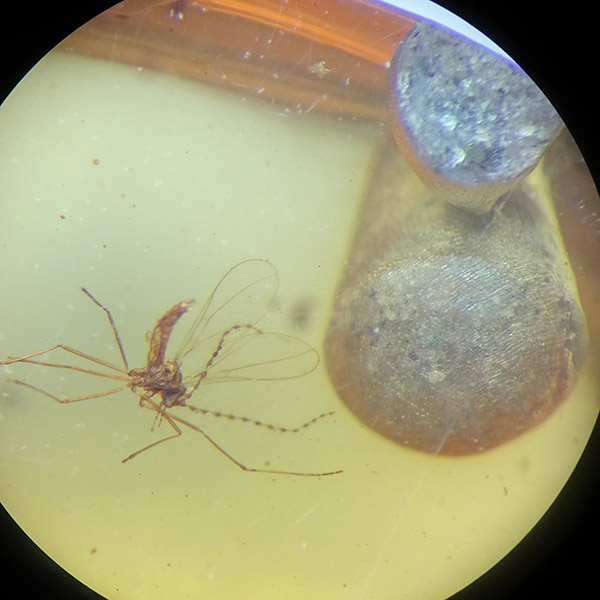
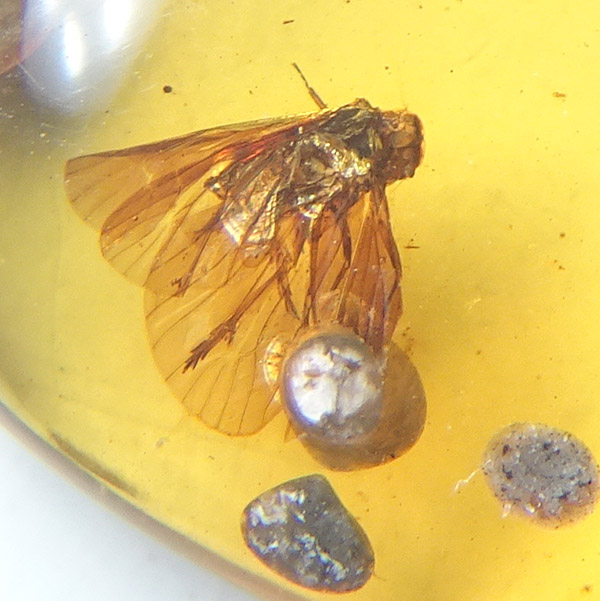
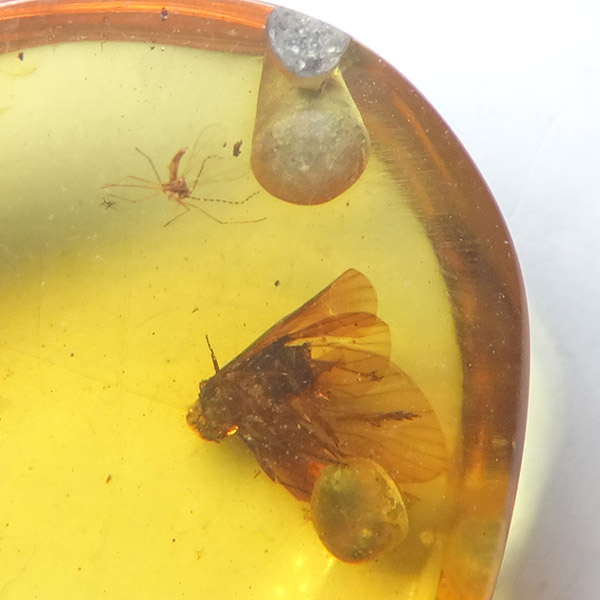
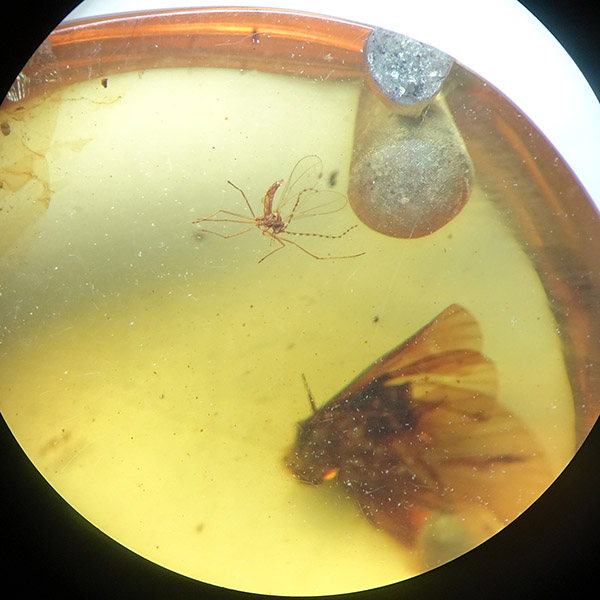
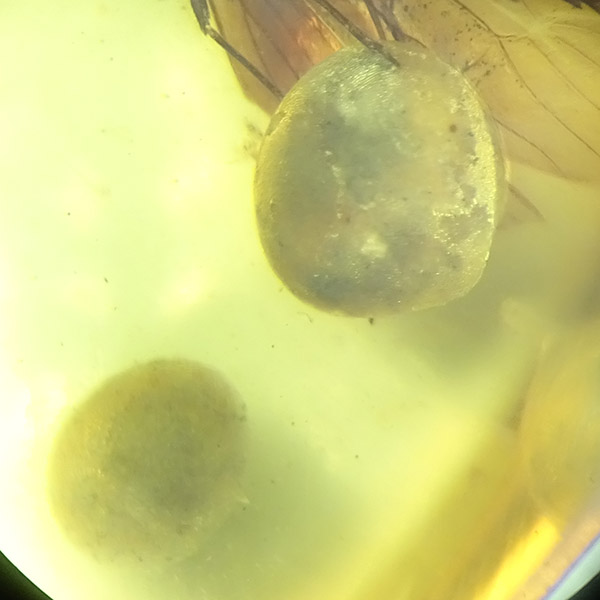
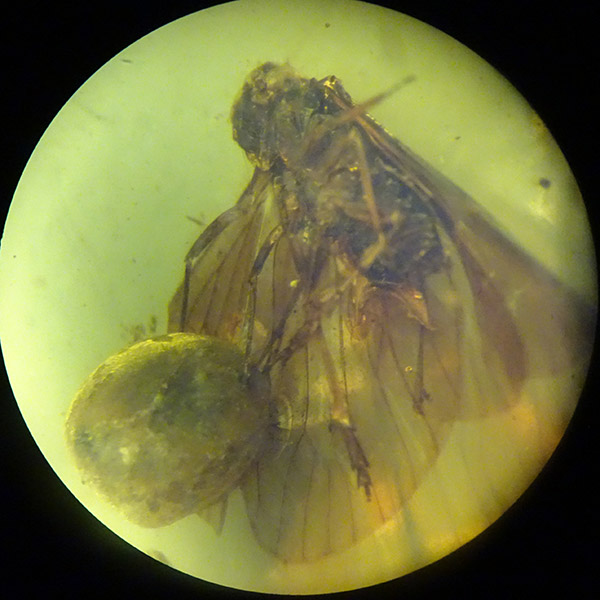
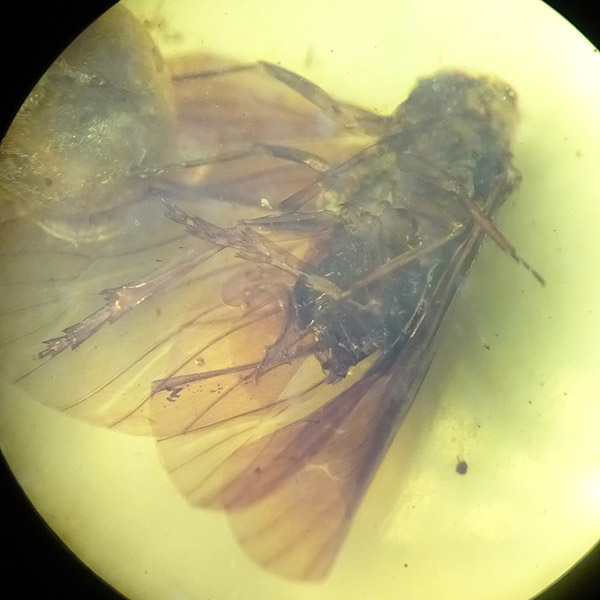
This piece contains a cicada (O. Hemiptera), a mosquito (O. Diptera) and Teredolites clavatus which is an ichnofossil (fossil footprint or trace of the activity of an organism).
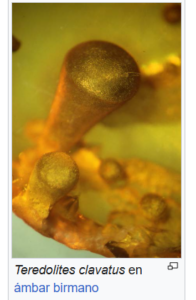
What is Teredolites clavatus?
It is a club-shaped fossil perforation produced by drilling bivalves marine.
These claviform (club-shaped) structures bordering Burmese amber from the Middle Cretaceous of Myanmar, previously misdiagnosed as fungal sporocarps, are domichnias (crypts) of Martesinae bivalves (Martesinae is a subfamily of marine bivalve mollusks belonging to the family Pholadidae).
How do they originate?
- The dense Cretaceous coniferous forests in the region of present-day Myanmar produced enormous quantities of liquid resin. Due to marine transgressions (a geological process in which sea level advances above the continental surface, which moves the coastline inland), these resin blocks were dragged into estuaries, mangroves or shallow marine environments.
- While in the salt water, the resin underwent initial hardening.
- The marine bivalves, by not discriminating between driftwood and soft resin blocks, colonized the surface of these nodules and drilled the interior to protect themselves, leaving the habitation chambers that we see today perfectly molded. The term "amberground" is used here to describe perforations in an amber substrate.
- Over time, the animals died, the perforations were filled with sediment and the entire complex was buried deep under the ocean floor, beginning the transformation of the resin into burmite. The fillings of the crypts are variable, including very fine to coarse grained sandy grade sediments and sparitic calcite cements. In some cases, the articulated valves of the responsible follid bivalve are visible within the perforations.
This phenomenon is irrefutable proof that the burmite was not formed in a strictly isolated continental manner, but in a highly dynamic coastal-marine transition zone, where the remains of forest resin coexisted directly with the ocean fauna.
The relationship between Teredolites clavatus and the formation of burmite represents one of the most fascinating paleontological discoveries about the interaction between terrestrial and marine ecosystems in the past.